
Beyond the Count: How an Aging Nation Is Changing the Way We Plan for the Future
Retirement Strategist Carroll Golden
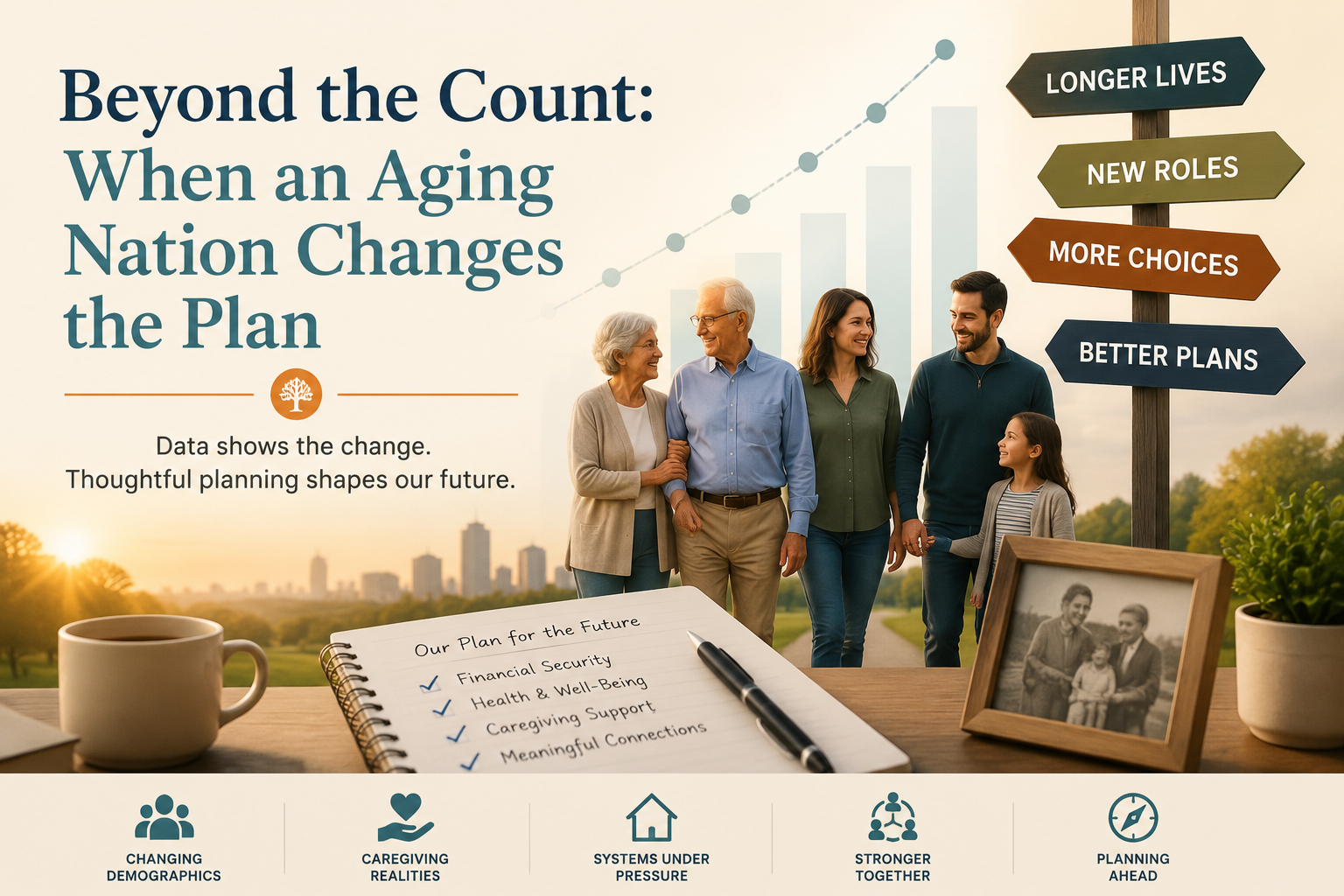
Numbers tell stories.
For centuries, the census has helped us understand who we are as a nation—where people live, how communities grow, and how society changes over time.
But today, the numbers are revealing something deeper.
We are becoming an aging nation.
This isn't simply a demographic shift. It is a transformation that affects retirement, healthcare, caregiving, workplaces, families, and the way we prepare for the future.
The question is no longer only how many people are living longer.
The bigger question is:
Are our systems, families, and plans prepared for longer lives?
Retirement Is Being Redefined
For generations, retirement followed a predictable path:
Education.
Work.
Retirement.
A quieter chapter supported by savings, Social Security, and perhaps a pension.
That traditional roadmap no longer reflects the reality many people experience today.
People are working longer—not always because they want to, but sometimes because they need to. Others transition gradually into retirement through consulting, part-time work, or flexible careers.
Retirement is no longer a single moment.
It has become a transition.
A person's later years may include continued work, caregiving responsibilities, new opportunities, and changing priorities.
The Growing Role of Family Caregiving
One of the biggest changes created by longer lives is the increasing importance of caregiving.
Many families are finding themselves supporting multiple generations at the same time.
Adult children may be caring for aging parents while raising their own children. Grandparents may provide childcare support that allows younger family members to remain in the workforce.
Families are adapting—but adaptation without preparation can create stress.
Caregiving is not only an emotional responsibility.
It can affect:
Career decisions
Retirement savings
Financial security
Family relationships
Physical and emotional health
A simple promise like “we’ll help if needed” is not always a complete plan.
A true caregiving strategy requires conversations about expectations, resources, responsibilities, and available support.
Longer Lives Require New Thinking
Living longer is one of humanity's greatest achievements.
But longevity also challenges many systems that were designed for a different era.
Healthcare systems, housing options, transportation, long-term care services, and workforce planning must all adapt to meet the needs of an older population.
The issue is not that aging is a problem.
The issue is that aging requires preparation.
A longer life deserves a longer plan.
The Financial Side of Longevity
Many retirement conversations focus heavily on savings and income.
Those are important, but they are only part of the picture.
A complete longevity plan should also consider:
Healthcare expenses
Potential long-term care needs
Housing decisions
Family support
Income interruptions caused by caregiving
The financial impact of caregiving can follow families for years. Reduced work hours, missed career opportunities, and lower retirement contributions can affect a caregiver's future security.
Planning ahead helps families make decisions with clarity instead of being forced into choices during a crisis.
Data Can Inform Us, But Conversations Move Us Forward
Statistics help us understand the scale of change.
Technology and data can help identify patterns and prepare better solutions.
But numbers alone cannot answer the most important questions.
Families still need conversations.
Employers still need solutions.
Communities still need preparation.
Advisors and professionals need to help individuals look beyond traditional retirement planning and consider the realities of longer lives.
Because the future of aging will not be solved by one statistic, one policy, or one financial product.
It will require thoughtful decisions from all of us.
A Final Thought
The story of an aging nation is not a story about decline.
It is a story about change.
Longer lives create opportunities for wisdom, connection, and continued contribution. But those opportunities are strongest when we prepare for the challenges that come with them.
The future belongs to those who recognize that retirement planning is no longer just about stopping work.
It is about designing a life that can adapt, thrive, and remain meaningful through every stage.