Caregiving Is a Marathon—Not a Sprint
Retirement Strategist Carroll Golden
When we think about endurance, we often picture marathon runners, elite athletes, or individuals training for extraordinary physical challenges.
But some of the greatest endurance stories never appear on a racecourse.
They unfold quietly every day in homes, hospitals, workplaces, and waiting rooms.
They belong to family caregivers.
Caregiving is rarely a short-term responsibility. For many families, it becomes a journey that stretches over months—or even years—requiring emotional resilience, financial flexibility, and remarkable perseverance.
Unfortunately, many caregivers begin this marathon without a map.
The Hidden Reality of Working Caregivers
Today's workforce includes millions of employees who are balancing careers while caring for aging parents, spouses, or other loved ones.
Their days often begin before work and continue long after the workday ends.
Medical appointments.
Medication management.
Financial decisions.
Transportation.
Unexpected emergencies.
These responsibilities don't fit neatly into a calendar.
As caregiving demands increase, many employees use vacation days, personal leave, or unpaid time away from work—not for rest, but to provide care.
Eventually, some reduce their hours, decline promotions, or leave the workforce altogether.
These choices are rarely made because people lack ambition.
They are made because family comes first.
The Cost No One Plans For
When people think about the financial impact of caregiving, they often focus on medical bills or long-term care costs.
Those expenses matter.
But another cost often goes unnoticed.
Lost income.
Interrupted careers.
Reduced retirement savings.
Missed opportunities for advancement.
These hidden financial consequences can continue long after caregiving responsibilities have ended.
A few years away from the workforce may affect retirement income for decades.
That's why caregiving should never be viewed as only a healthcare issue.
It is also a financial planning issue.
Support Changes Outcomes
One of the most encouraging findings from recent research is that caregivers who receive meaningful support report better emotional wellbeing and are more likely to remain engaged at work.
Support doesn't eliminate the challenges of caregiving.
But it can make those challenges more manageable.
Employers have an opportunity to make a meaningful difference by offering:
Flexible work arrangements
Employee assistance programs
Caregiving resources and education
Access to community services
A workplace culture that recognizes caregiving as a normal part of life
Sometimes the greatest support isn't a new benefit.
It's knowing someone understands.
Planning Before the Finish Line
Too many families wait until a health crisis forces difficult conversations.
By then, decisions are often made under pressure rather than with intention.
Planning ahead means asking important questions early.
Who will provide care if it's needed?
How will work responsibilities be managed?
What financial resources are available?
What community services can help?
How can caregiving responsibilities be shared fairly among family members?
These conversations don't predict the future.
They prepare families to face it with greater confidence.
A Marathon Worth Preparing For
Caregiving is not a sprint.
It is a long journey filled with unexpected turns, emotional moments, and decisions that affect the entire family.
No one should have to run that race alone.
By planning ahead, building support systems, and recognizing the true impact caregiving has on work, finances, and relationships, we can help families move forward with greater strength and resilience.
A Final Thought
The strongest caregivers are not those who never become exhausted.
They are the ones who understand that asking for help is part of the journey.
Just as marathon runners rely on preparation, encouragement, and support along the course, caregivers deserve the same.
Because caregiving isn't measured by how quickly we reach the finish line.
It's measured by the compassion, resilience, and planning that carry us every step of the way.
Continue the Conversation
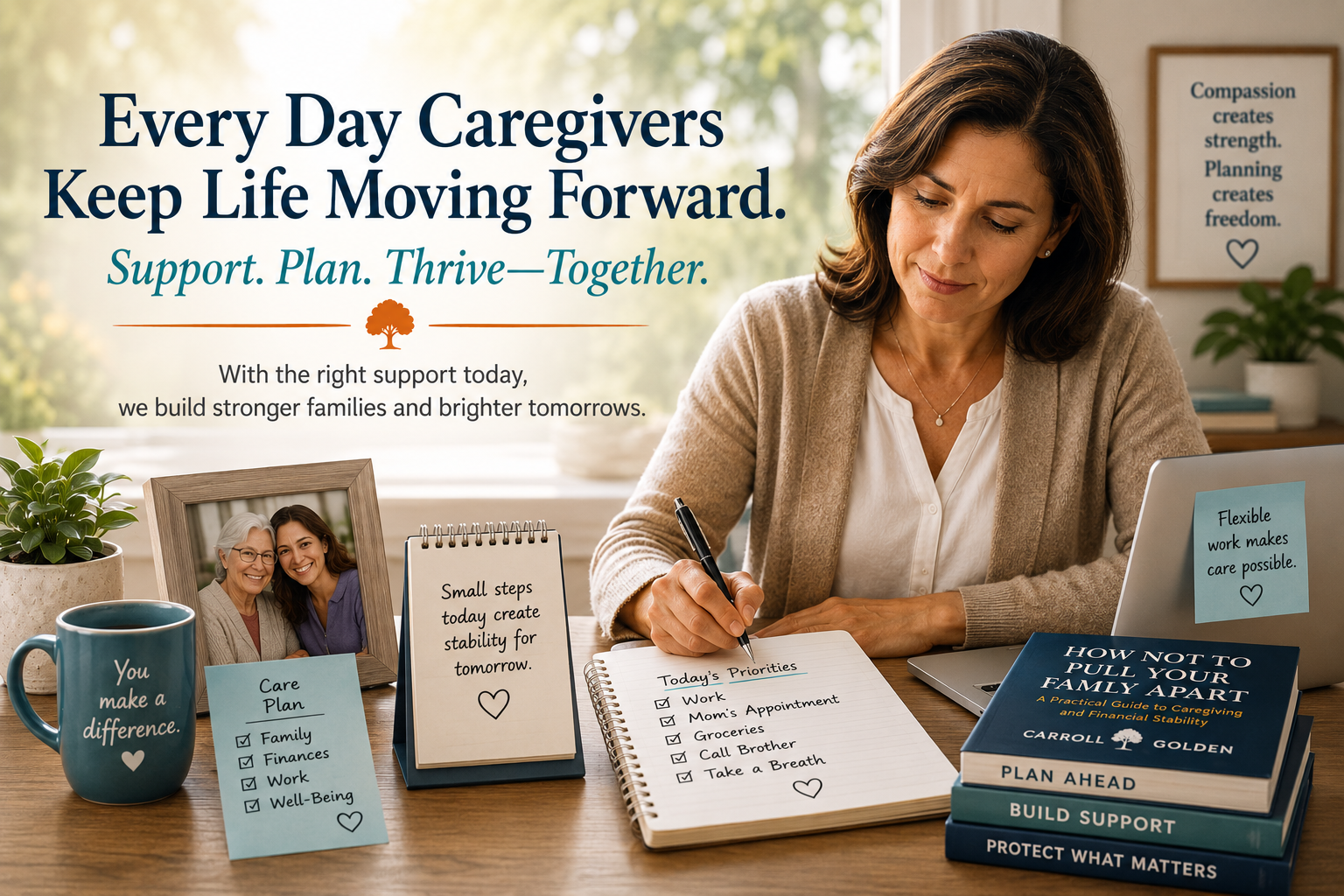
These are the conversations I explore in my book, How Not To Pull Your Family Apart: A Practical Guide to Caregiving and Financial Stability. My goal is to help families understand the financial and emotional realities of caregiving so they can prepare thoughtfully, support one another, and build plans that last for the long journey ahead.