The Best Financial Plans Begin with a Story, Not a Sales Pitch
Retirement Strategist Carroll Golden
As financial advisors, we spend years mastering products, strategies, tax laws, and planning techniques. We pride ourselves on understanding complex financial solutions and delivering the right recommendations at the right time.
But here's something I've learned over the years:
Clients don't buy complexity. They buy clarity.
Most people don't wake up excited to learn about long-term care insurance, estate planning, or asset protection. They wake up wondering whether they'll have enough money, whether they'll become a burden to their family, or what happens if life doesn't go according to plan.
Those are emotional questions—not financial ones.
Our role isn't simply to provide answers. It's to help clients understand what those answers mean for their lives.
The Power of Simplicity
One of the biggest mistakes advisors make is assuming that more information creates more confidence.
In reality, the opposite is often true.
When clients are overwhelmed by charts, statistics, product comparisons, and technical language, many simply shut down. They delay decisions—not because they don't care, but because the path forward feels too complicated.
People rarely remember every detail of a presentation.
They remember how clearly someone helped them see their future.
That's why the best planning conversations simplify complexity instead of adding to it.
Stories Create Understanding
Throughout history, stories have been one of the most effective ways humans learn.
A story allows people to see themselves.
It removes the pressure of making an immediate decision and instead invites them to imagine possibilities.
When clients follow the journey of a fictional family facing real-life planning decisions, they begin asking themselves meaningful questions:
What would I do in that situation?
Have I prepared my own family?
Who would make decisions for me?
What conversations have I been avoiding?
Those questions are far more valuable than memorizing policy features.
Stories move people from information to action.
Planning Is About People, Not Products
Long-term care planning, retirement planning, and legacy planning are often presented as financial exercises.
I believe they're much more than that.
They're conversations about independence.
About dignity.
About family relationships.
About preserving choices before they're taken away.
When we shift the conversation from products to people, clients become more engaged because they recognize what's truly at stake.
Financial planning becomes personal.
And that's exactly where meaningful decisions begin.
Keep It Simple. Keep It Personal.
One of the most effective communication strategies I've found is keeping the process simple.
Clients don't need twenty different options on day one.
They need a clear framework they can understand.
They need someone who can organize uncertainty into manageable steps.
When we focus on simplicity, clients gain confidence.
When they gain confidence, they take action.
And action is what ultimately creates better outcomes.
A Framework Clients Can Actually Follow
One reason I value story-based planning is that it naturally creates a framework.
Instead of overwhelming clients with everything that could happen, we guide them through realistic situations one step at a time.
Each decision builds on the last.
Each conversation becomes more meaningful.
Rather than selling, we're helping clients personalize a plan that reflects their own values, priorities, and family dynamics.
That changes the advisor-client relationship.
Instead of being viewed as someone selling financial products, you become a trusted guide helping clients navigate one of life's most important journeys.
The Goal Isn't to Sell—It's to Empower
At the end of every client meeting, I want people to leave feeling less anxious than when they arrived.
Not because every problem has been solved.
But because they finally understand what the next step looks like.
That's what great financial planning should do.
It should replace confusion with clarity.
Fear with confidence.
Complexity with a simple, actionable path forward.
When clients understand the story of their future, they become active participants in creating it.
And that is far more powerful than any sales presentation could ever be.
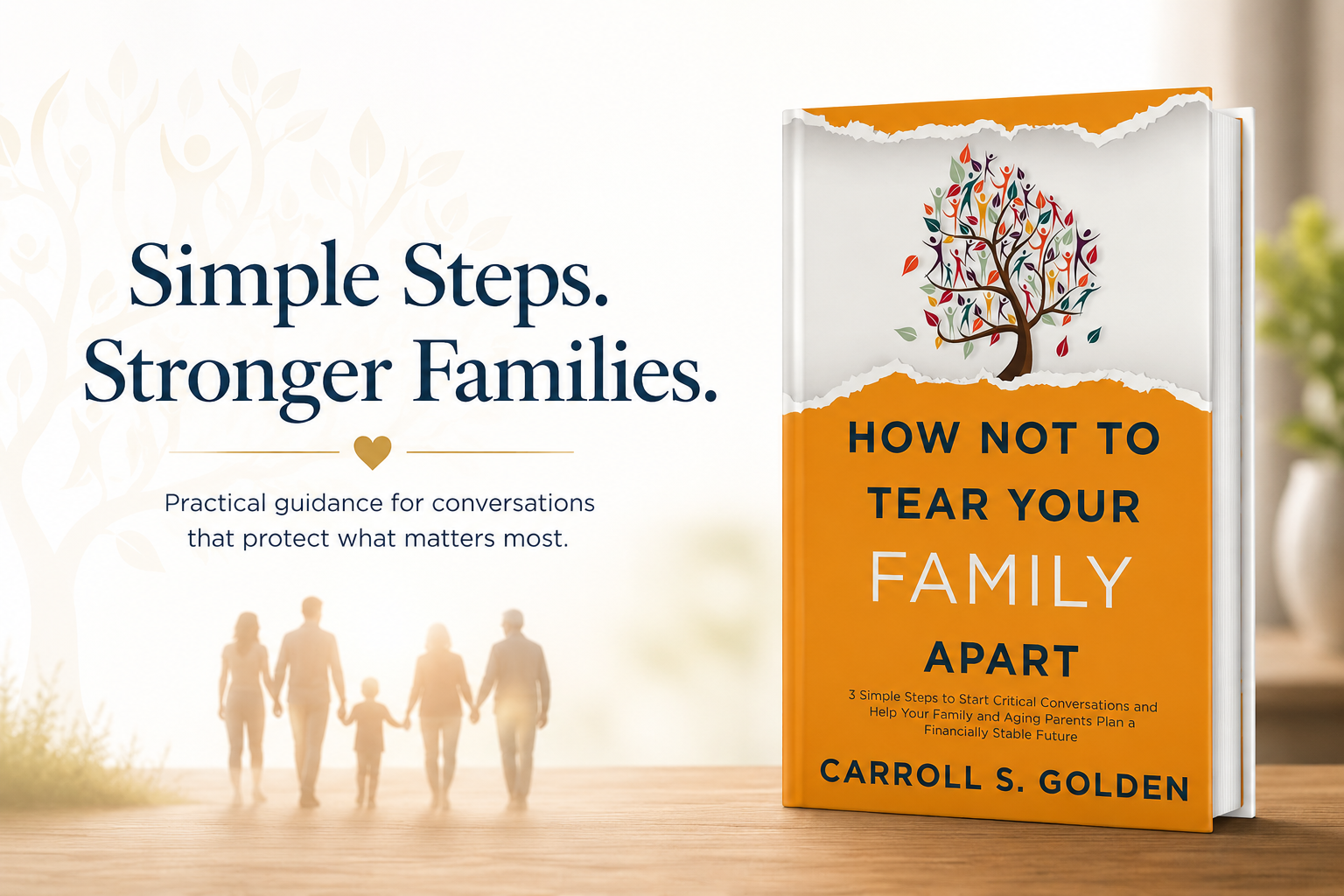
If you're looking for a practical way to make complex planning conversations easier for clients, How Not to Tear Your Family Apart offers a simple, story-driven framework that helps families understand long-term care, legacy planning, and the importance of making thoughtful decisions before a crisis occurs.
Sometimes the most effective financial plan isn't the most complicated one—it's the one your clients actually understand.