The Care Economy: Where Compassion Meets Capital
Retirement Strategist Carroll Golden
Why an Account Balance Is Not a Financial Plan
Many people feel a sense of comfort when they see money sitting in a bank account or investment portfolio. It creates the illusion of security—numbers on a page suggesting stability and control.
But here’s the truth: an account balance is not a financial plan.
Numbers alone do not create readiness.
Investments, savings, and statements are only components of a plan—not the plan itself. Even a signed legal document doesn’t guarantee that a family is prepared for what lies ahead. It may confirm ownership, but it does not ensure understanding.
And without understanding, even the most well-structured plan can fail.
The Missing Piece: Readiness
Financial planning often focuses on assets, returns, and documentation. But real preparedness goes beyond structure.
It asks deeper questions:
Who understands the plan?
Who knows what to do when something changes?
Who is ready to step in when life takes an unexpected turn?
Because responsibility is not transferred simply by listing a name on a document.
It is transferred through:
Clarity
Communication
Shared understanding
This is where many plans fall short.
The Third Great Transfer: Responsibility

We are living in a time often referred to as the “Great Wealth Transfer.” But there’s another, equally important shift happening beneath the surface—the transfer of responsibility.
Wealth can be passed down legally.
But responsibility must be taught, discussed, and understood.
Without that:
Heirs may feel unprepared
Decisions may be delayed or mishandled
Family conflicts may arise
Long-term plans may collapse under pressure
A successful transition is not just about what is passed down—but how well people are prepared to manage it.
The Role of Financial Professionals
Today’s financial professionals must go beyond numbers.
It’s no longer enough to:
Build technically sound portfolios
Draft legal documents
Organize financial structures
They must also:
Facilitate meaningful conversations
Identify blind spots
Encourage family involvement
Ensure clarity across generations
Because even the most perfect plan on paper can fail if the human side is ignored.
The Power of Conversation
Planning must include more than structure—it must include dialogue.
Families should be encouraged to talk about:
Roles and responsibilities
Expectations
Contingency plans
Values around money and care
When these conversations happen:
Confidence increases
Confusion decreases
Transitions become smoother
And most importantly—people feel prepared.
The Care Economy: Where Compassion Meets Capital
Financial planning today sits at the intersection of money and human experience.
This is the Care Economy—where financial decisions are deeply connected to caregiving, aging, health, and family dynamics.
It recognizes that:
Wealth is not just financial—it’s relational
Planning is not just technical—it’s emotional
Success is not just growth—it’s resilience
Compassion and capital must work together.
From Strength to Resilience
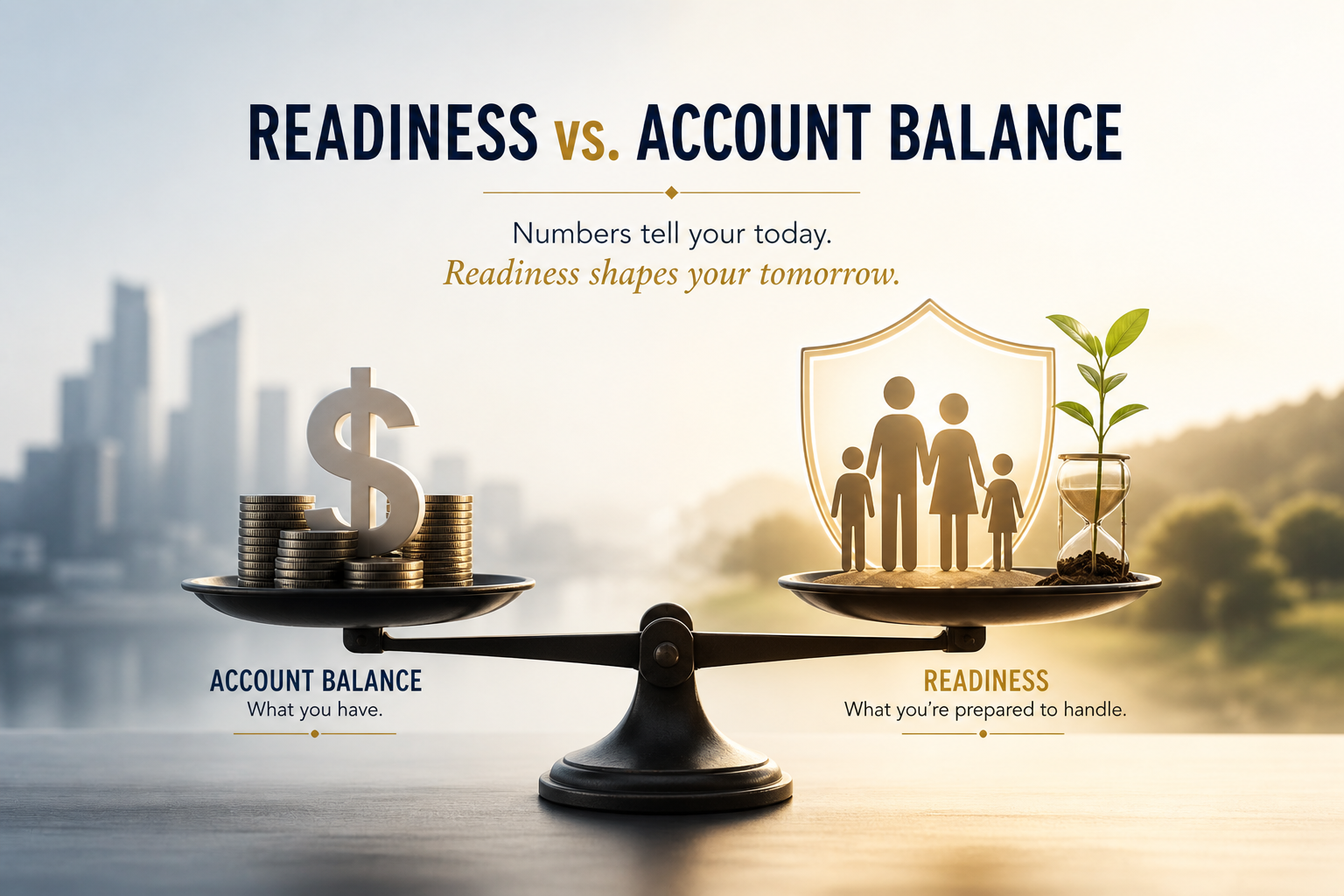
An account balance may show strength.
But readiness shows resilience.
And resilience is what truly matters when life changes—because it always does.
A strong financial plan is not just:
Organized
Documented
Technically sound
It is:
Understood
Shared
Actionable

Conclusion
Financial planning must evolve.
It must move beyond numbers and structure—and embrace the human side of wealth.
Because in the end, the question isn’t:
“How much do you have?”
It’s:
“Are you—and your family—ready?”
If these ideas resonate, Carroll S. Golden explores them further in Leading in the New Retirement Era: How to Lead, Adapt, and Win in an AI-Driven World—offering practical insights on how advisors can adapt, lead, and build deeper client relationships in a changing financial landscape.