What If the Real Inheritance Isn’t the Money?
Retirement Strategist Carroll Golden
We’re in the midst of the largest wealth transfer in history.
According to Cerulli Associates, over $124 trillion is expected to transfer from Baby Boomers to Gen X and Millennials by 2045. This unprecedented shift will touch nearly every family and financial professional, reshaping how Americans think about inheritance, legacy, and the true meaning of retirement planning.
But here’s the challenge: most of the attention is on the assets—the accounts, the real estate, the tax structures.

What’s often overlooked is what’s being transferred silently: assumptions, resentments, expectations, and unresolved dynamics.
A Retirement Synthesist™ sees beyond the surface. They know that behind every asset lies a story—and often, a set of emotionally charged decisions no one wants to talk about.
Every asset has a backstory. Every distribution, a hidden meaning. Every silence, a potential spark for conflict.
When expectations are left unspoken, the result is not just family friction. It’s financial disarray, legal tension, and the erosion of trust that wealth alone cannot repair.
This is especially true in families where one generation has worked hard to build financial stability and wants to ensure a legacy, but the next generation is unclear—or unaware—of the values behind the money.
Most advisors today are experts in the technical: they manage portfolios, model outcomes, minimize taxes. These are essential skills. But today’s families need something more.
They need guidance that bridges wealth and meaning. Advisors who can navigate emotional terrain, not just economic charts.
This is the space where a Retirement Synthesist™ thrives—not replacing traditional advice, but enhancing it with deeper conversations, broader context, and stronger family alignment.
The most damaging wealth transfers aren’t the ones that go wrong on paper. They’re the ones that fracture relationships.
For example, a daughter may inherit the family home while the son receives investment accounts. On paper, things look equal. But emotionally? The daughter may feel trapped maintaining a house she didn’t ask for, while the son resents taking on perceived risk. No one discussed it in advance.
Or consider a scenario where a parent assumes one child will be the caregiver, but never explicitly says so. When the time comes, that child feels blindsided, isolated, and overwhelmed. The other siblings, meanwhile, claim they would’ve helped—but the moment passed.
In these cases, the documents were complete. The planning, from a legal standpoint, was finished. But the emotional work never began.
A Retirement Synthesist™ doesn’t wait for crisis to force clarity. They guide families to address these issues head-on, using tools that open conversations and provide structure.
One such tool is the Care Guide, introduced in my book How Not to Pull Your Family Apart. This guide collects essential health, insurance, and legal data in one place, giving caregivers a roadmap before emergencies hit.
Another tool is the Care Squad model—assigning clear roles for each family member before something goes wrong. Who calls the doctor? Who handles the bills? Who updates extended family? These are decisions best made in calm moments, not during chaos.
Finally, the Care Planning Team (CPT) model brings multiple generations together to discuss care, resources, and expectations in real-time. These conversations build respect, reveal hidden concerns, and make later decisions smoother and more supported.
Advisors who embrace these models don’t just prevent emotional fallout. They position themselves as indispensable to multiple generations of the families they serve.
That’s the essence of Retirement Synthesist™ thinking: bringing together finance, health, care, and communication in a way that respects everyone's role.
This shift also offers a unique growth opportunity. As clients age and their families become more involved in planning, advisors who facilitate multigenerational clarity will build stronger, longer-lasting relationships—not just with individuals, but with entire family systems.
And the upside is measurable: greater trust, more referrals, increased retention of inherited assets, and stronger alignment between advice and action.
It’s time to evolve the role of the retirement planner. Not to abandon portfolio management or financial rigor—but to expand what it means to lead during life’s most complex transitions.
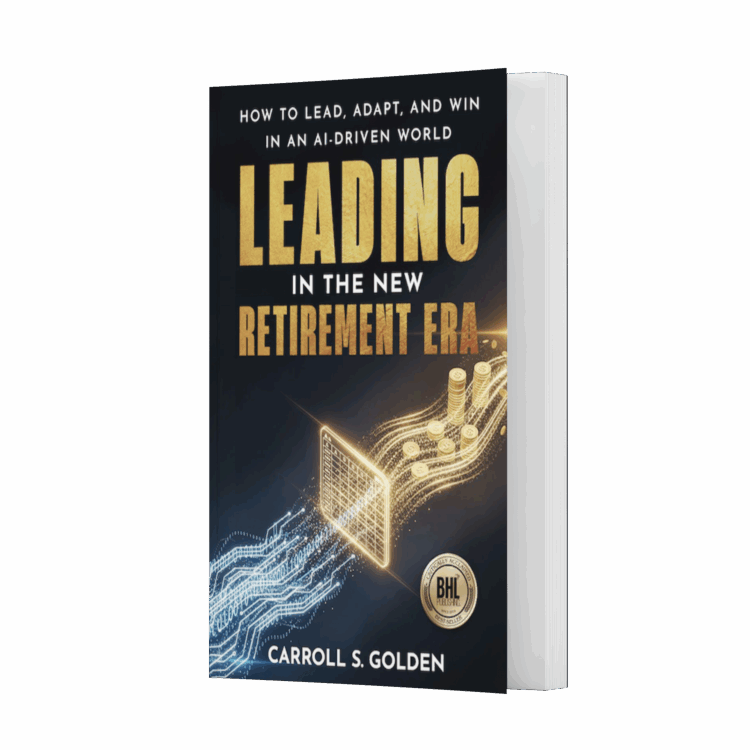
Leading in the New Retirement Era introduces this shift with practical frameworks, advisor-tested strategies, and a clear blueprint for success.
Whether you’re a veteran advisor or a rising planner looking to differentiate your practice, the Retirement Synthesist™ approach offers a new way to meet the needs of modern families—and future-proof your value.
Because at the heart of all this money, paperwork, and planning is something profoundly human: the desire to be remembered, respected, and not misunderstood.
That doesn’t come from a spreadsheet. It comes from thoughtful leadership, early conversations, and trusted guides who know how to ask the right questions.
Let’s ground this in a real-world example. Consider a family with three adult children. The eldest lives nearby and has always been 'the responsible one.' When their father begins showing signs of cognitive decline, the family quietly assumes she’ll take charge. She does—but without any formal agreement, support structure, or conversation about boundaries. Over time, caregiving duties escalate, financial decisions become urgent, and resentment grows. One sibling is uninvolved and unaware. The other criticizes decisions but won’t step in. The result? A family fracture—and a parent who senses the tension but can’t fix it.

Now imagine a different version. In this version, they’ve already completed a multi-generational Care Guide. Everyone’s roles were defined in a Care Squad. And through a Care Planning Team process, each generation had a voice in what kind of help they could give and insurance options they could afford—and what kind of help they would need. The parent still needs care, but now the family surrounds them with clarity instead of chaos. That’s not just planning. That’s leadership.
This is where the concept of Longevity Literacy Gatherings becomes essential. As described in Leading in the New Retirement Era, these gatherings are structured conversations that allow families to discuss care, communication, and planning long before a crisis hits. They don’t require formal presentations or legal preparation. What they require is permission. Permission to ask questions, share concerns, and plan in ways that protect dignity across every generation.
The real beauty of this approach is that it doesn’t replace financial planning. It enriches it. Advisors who introduce these frameworks aren’t taking on more liability—they’re expanding trust. And trust is the number one driver of long-term retention and referrals.
Let’s address a common concern: What if clients push back? What if they say, 'I just want to talk about my portfolio' or 'My kids aren’t ready for this yet'?
That’s understandable. But it’s also an opportunity to reframe.
- 'We’re not taking anything away from your plan—we’re adding durability to it.'
- 'This isn’t about control—it’s about clarity.'
- 'These conversations protect relationships, not just assets.'
Small actions consistently beat grand intentions. This isn't about solving everything in one meeting. It’s about starting with one Care Guide, one family role clarified, one expectation made visible. That’s how trust is built. That’s how legacies are preserved.
And as highlighted on page 129 of Leading in the New Retirement Era: “The most secure clients are the most informed—and the most supported.” Support doesn’t just mean product selection or portfolio reviews. It means being present or a catalyst for the conversations that define how wealth will shape lives long after the original owner is gone.
Let’s also be honest about what happens when this isn’t addressed. Families don’t just face stress—they face silence. Children who avoid conversations because they don’t want to offend. Parents who delay decisions because they want to stay independent. Advisors who avoid tough topics because they weren’t trained for them.
A Retirement Synthesist™ is trained for exactly this. Not through scripts or checklists, although those are helpful—but through a mindset shift. From technician to translator. From transactions to transitions. From expert to educator.
That’s what today’s families need. And that’s where your practice can grow—organically, sustainably, and meaningfully.
In fact, as more firms seek to differentiate themselves in a crowded marketplace, this approach becomes a competitive advantage. Imagine arranging specialist for quarterly Longevity Literacy Gatherings with your clients’ families. You’re not just managing accounts. You’re mentoring the next generation. You’re building continuity. You’re positioning yourself as the advisor who sees beyond numbers.
Explore more about these models inside Leading in the New Retirement Era. This book is not just a call to action—it’s a field guide for advisors ready to lead in a time of longevity, complexity, and opportunity.