Longevity Isn’t About Getting Old—It’s About Reinventing Midlife
Retirement Strategist Carroll Golden
The Retirement Timeline Is Broken—Here’s How to Fix It
Most people don’t realize they’re living in a story that no longer fits. Especially when it comes to retirement.
We were handed a narrative that goes something like this:
You work until 65.
You retire.
You slow down.
You age.
Eventually, you disappear from relevance.
That was a story built for a time when life expectancy hovered around 68. When retirement lasted 5 to 10 years. When elders were a short chapter—not a whole new book.
But here’s the truth: Longevity isn’t an extension of old age. It’s the reinvention of midlife.
And if that’s true, we need to radically upgrade the timeline.
Welcome to the new terrain—where retirement isn’t a destination. It’s a series of strategic transitions.
It’s time to retire the old retirement.

The Retirement Cliff vs. The Retirement Runway
Most planning still treats retirement like a cliff.
One day you’re working. The next, you’re not. One day, you’re “valuable.” The next, you’re “retired.” It’s a sharp break.
But for today’s professionals—especially those living into their 80s, 90s, or beyond—that model creates anxiety, disorientation, and regret.
The new model? A runway.
Think of retirement not as a single point—but as three distinct phases:
Freedom Phase (60s–early 70s): Still active. Still sharp. High energy. You may downshift, but you’re not done. This is where many pursue new ventures, consulting, caregiving, or purpose-driven work.
Adaptation Phase (mid-70s–80s): Energy changes. Relationships shift. Care needs may arise. This phase demands planning not just for income, but for identity, mobility, and community.
Legacy Phase (late 80s+): Wisdom, reflection, simplification. The focus turns toward meaning, connection, transfer—not just of wealth, but of values and stories.
A Retirement Synthesist doesn’t just create income strategies. They help shape this runway—so each phase has purpose, support, and dignity.
The Problem With “Traditional” Retirement Planning
When most advisors build retirement plans, they’re looking at a 30-year cash flow model. Taxes. Social Security. RMDs. Risk tolerance.
All important.
But that’s just math.
What’s missing? The human story.
What will this client do with their time?
How will their identity shift once their title disappears?
What silent obligations—like caregiving—might suddenly hijack their plan?
What emotional shifts will come from watching their friends or spouse decline first?
These aren’t hypotheticals. They’re inevitabilities. And a Retirement Synthesist doesn’t treat them as side notes.
They are the design challenge.
Reframing Longevity as Capacity—Not Fragility
We often treat longer lives as something to fear: more health issues, more expenses, more dependency.
But what if we framed it differently?
Longevity = expanded capacity.
More capacity to lead—into your 70s and 80s.
More capacity to teach, mentor, create.
More capacity to influence what gets passed on to the next generation.
The Retirement Synthesist helps clients tap into that capacity—not just protect against decline.
This is why we need a new title. “Financial advisor” isn’t enough anymore. Retirement Synthesist is the evolved identity—because it encompasses health, family systems, purpose, caregiving, legacy, and income.
It’s an orchestration role. Not a transaction.
The 3 Shifts Every Retirement Synthesist Makes
If you’re building toward this role, here are three mindset shifts to adopt now:
Stop planning for retirement. Start planning within it. Clients need help navigating the transitions, not just hitting the target.
Prioritize time literacy over asset accumulation. Clients may fear running out of money. But more often, they fear running out of time that matters.
Redesign meetings around conversation—not just data. The spreadsheet tells you what’s possible. The conversation tells you what matters.
Conclusion: Don’t Age According to an Expired Map
Too many people are living longer, yet still planning their lives based on obsolete frameworks. They hit their 60s and think they’re supposed to disappear quietly into the background.
That’s not just sad—it’s dangerous.
It robs families of wisdom. It robs communities of leadership. It robs individuals of their most impactful years.
A Retirement Synthesist doesn’t just ask, “Are you ready to retire?” They ask, “What are you becoming next?”
That’s the question worth building for.
Ready to start that conversation—for yourself or your clients?
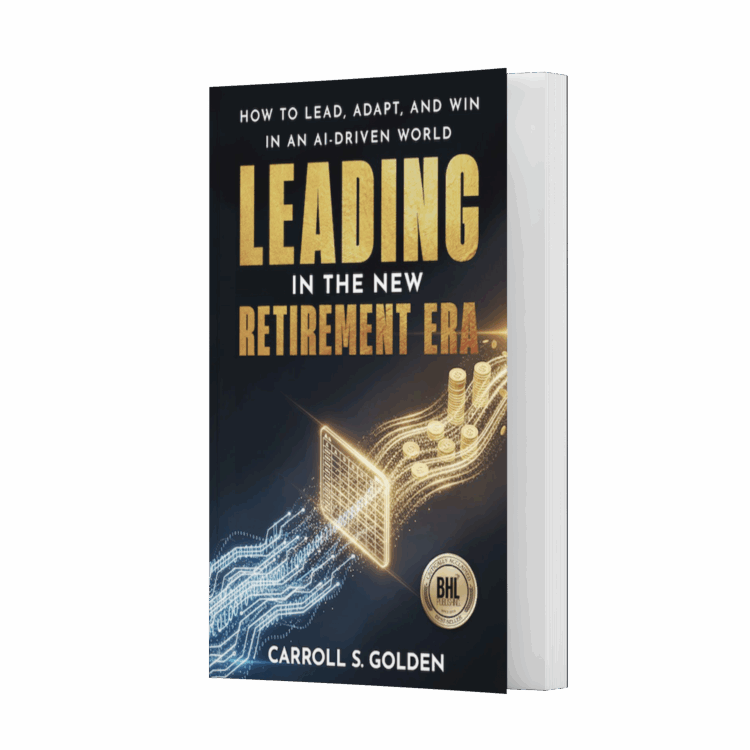
Explore the full framework in Leading in the New Retirement Era and discover how to navigate the next chapter with clarity, purpose, and confidence.