Health Savings Accounts and Flexible Spending Accounts: Why Knowing the Difference Matters
Retirement Strategist Carroll Golden
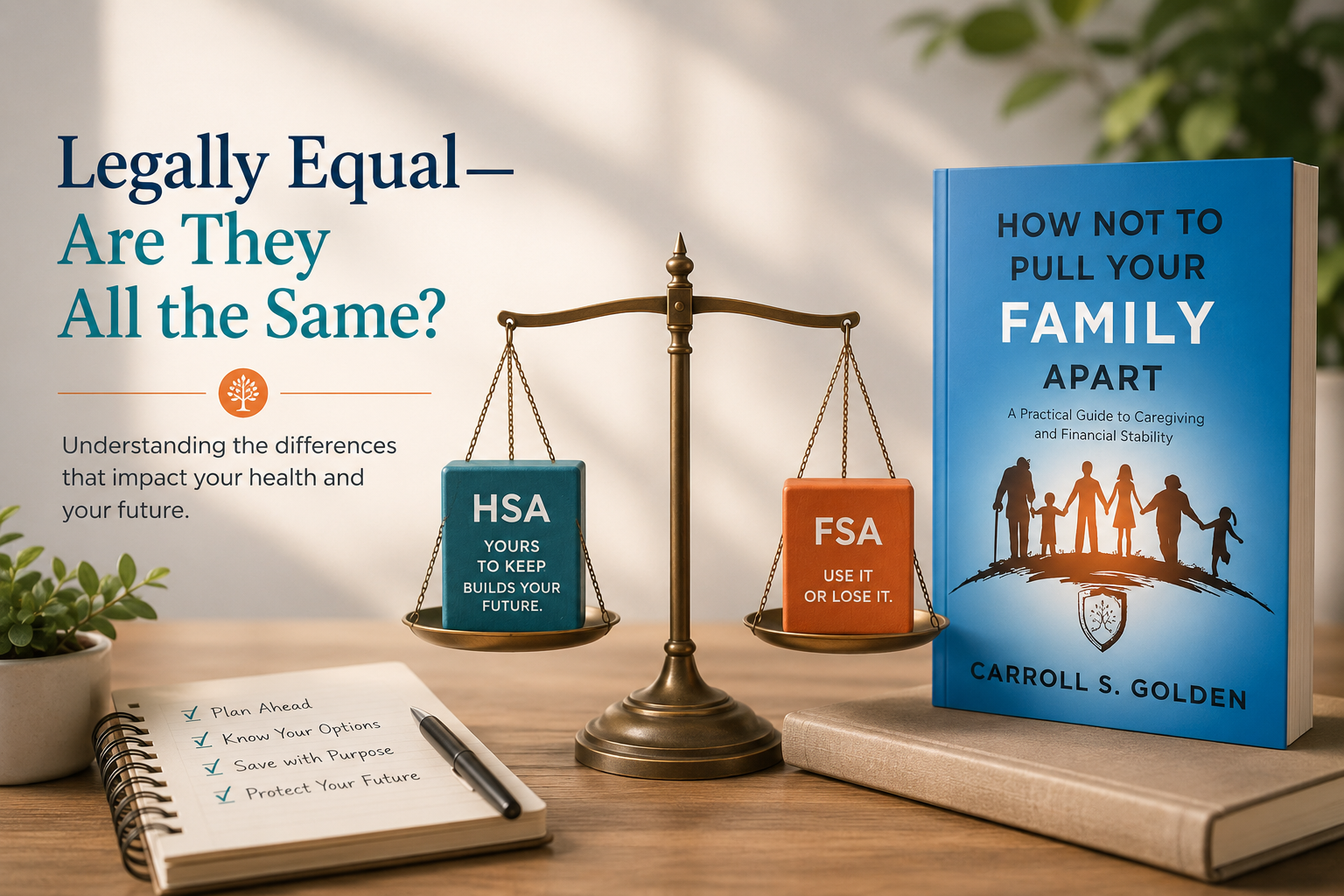
When it comes to healthcare planning, I've learned that many families assume all savings accounts designed for medical expenses work the same way.
They don't.
I've had countless conversations with people who use the terms Health Savings Account (HSA) and Flexible Spending Account (FSA) interchangeably. It's an easy mistake to make, but understanding the difference can have a significant impact on your financial future—especially as healthcare costs continue to rise.
The more informed you are today, the more prepared you'll be tomorrow.
Similar Purpose, Different Rules
Both HSAs and FSAs help you pay for qualified medical expenses using pre-tax dollars.
That's where the similarities largely end.
An FSA is typically offered through your employer and is tied to your workplace benefits. In many cases, unused funds must be spent within a certain timeframe, depending on your employer's plan.
An HSA, on the other hand, belongs to you—not your employer. If you qualify by enrolling in a high-deductible health plan, the account stays with you even if you change jobs or retire.
That distinction alone makes an HSA a powerful long-term planning tool.
Healthcare Costs Don't End at Retirement
Many people focus on saving for retirement without giving equal attention to future healthcare expenses.
Yet healthcare is often one of the largest costs retirees will face.
Doctor visits, prescription medications, long-term care, and unexpected medical events can place tremendous pressure on retirement savings if families haven't planned ahead.
That's why understanding every available resource matters.
Planning isn't about finding one perfect solution.
It's about building a strategy that works together.
Long-Term Thinking Creates Better Outcomes
One reason HSAs have become increasingly popular is their long-term flexibility.
Unlike many workplace benefit accounts, HSA funds generally remain available year after year. They can continue growing over time and provide valuable resources for future healthcare expenses.
For families preparing for longevity, that flexibility can make a meaningful difference.
Healthcare planning isn't just about today's medical bills.
It's about preparing for tomorrow's possibilities.
Ask Questions Before You Decide
One of the biggest mistakes I see is assuming that because a benefit is offered, it's automatically the right choice.
Every family's situation is different.
Your employment, health insurance, retirement goals, and anticipated healthcare needs all influence which options may be appropriate for you.
Taking time to ask questions today can prevent costly misunderstandings later.
Knowledge is one of the most valuable investments you can make.
Planning Brings Peace of Mind
Financial planning isn't simply about accumulating assets.
It's about creating confidence.
When you understand how your healthcare benefits fit into your broader retirement strategy, you're better equipped to make decisions that support both your financial security and your quality of life.
The goal isn't to know every tax rule or insurance regulation.
The goal is to make informed decisions that reduce uncertainty for you and your family.
A Final Thought
Healthcare planning has become increasingly complex, but complexity shouldn't discourage us from preparing.
Whether you're exploring an HSA, reviewing your workplace benefits, or planning for retirement, every informed decision strengthens your future.
The more clarity you have today, the more confidence you'll have tomorrow.
And that's one of the greatest gifts you can give yourself—and the people you love.
Continue the Conversation
These are the kinds of practical financial and caregiving topics I explore in my book, How Not To Pull Your Family Apart: A Practical Guide to Caregiving and Financial Stability. My hope is to help individuals and families better understand the financial decisions that support healthier aging, stronger relationships, and greater peace of mind throughout retirement.