Progress Takes Time: Why We Must Continue the Fight Against Alzheimer’s Disease
Retirement Strategist Carroll Golden
Few diagnoses change a family more profoundly than Alzheimer's disease.
It doesn't simply affect memory. It reshapes relationships, caregiving responsibilities, financial decisions, and the future families once imagined together.
That's why every piece of research matters—even when the results aren't what we hoped for.
Recently, researchers studying potential Alzheimer's treatments shared findings that were less encouraging than many anticipated. While disappointing, these results should never be mistaken for failure.
Scientific progress is rarely a straight line.
Every study moves us one step closer to understanding a disease that continues to affect millions of individuals and the families who love them.
Alzheimer's Is More Than a Medical Diagnosis
For those who have never experienced Alzheimer's within their family, it can be difficult to understand its full impact.
The disease gradually changes a person's ability to remember, communicate, make decisions, and remain independent.
But Alzheimer's also changes the lives of spouses, children, grandchildren, and caregivers.
Families often become decision-makers, advocates, financial managers, and full-time caregivers—all while coping with the emotional reality of watching someone they love slowly change.
Hope Requires Patience
Medical breakthroughs rarely happen overnight.
Research often advances through small discoveries rather than dramatic headlines.
Some studies confirm promising ideas.
Others tell researchers which paths may not lead to the answers they hoped for.
Both outcomes are valuable.
Science moves forward by learning what works—and what doesn't.
While recent findings may feel discouraging, they provide important knowledge that helps shape future research and improve tomorrow's treatments.
Planning While We Hope
Hope and preparation are not opposites.
In fact, they belong together.
Families with a history of Alzheimer's or other forms of dementia should never allow uncertainty to prevent important conversations.
Planning ahead can include:
Discussing healthcare wishes
Reviewing financial resources
Preparing legal documents
Exploring long-term care options
Talking openly with family members about future caregiving responsibilities
These conversations may be uncomfortable, but they provide clarity when families need it most.
Supporting the Caregivers
When we talk about Alzheimer's, we often focus on the individual living with the disease.
We should also remember the caregivers.
Caregiving requires extraordinary patience, resilience, and compassion. It can affect careers, finances, physical health, and emotional well-being.
No one should feel they must navigate that journey alone.
Building a support network, seeking professional guidance, and sharing responsibilities whenever possible can make an enormous difference.
Looking Forward with Purpose
Advances in medicine have helped people live longer than previous generations.
Our challenge now is ensuring those longer lives are lived with dignity, purpose, and the support families deserve.
That requires continued investment in research, greater public awareness, and thoughtful planning for the realities of cognitive decline.
Progress may not always arrive as quickly as we hope.
But every study, every conversation, and every family that prepares ahead brings us closer to a future where individuals facing Alzheimer's receive better care—and caregivers receive the support they need.
A Final Thought
Disappointment should never become discouragement.
Scientific discovery is built on persistence.
Families facing Alzheimer's demonstrate that same persistence every day through their love, patience, and commitment to one another.
We cannot control every diagnosis.
But we can choose to prepare, to support one another, and to continue believing that today's research lays the foundation for tomorrow's breakthroughs.
Continue the Conversation
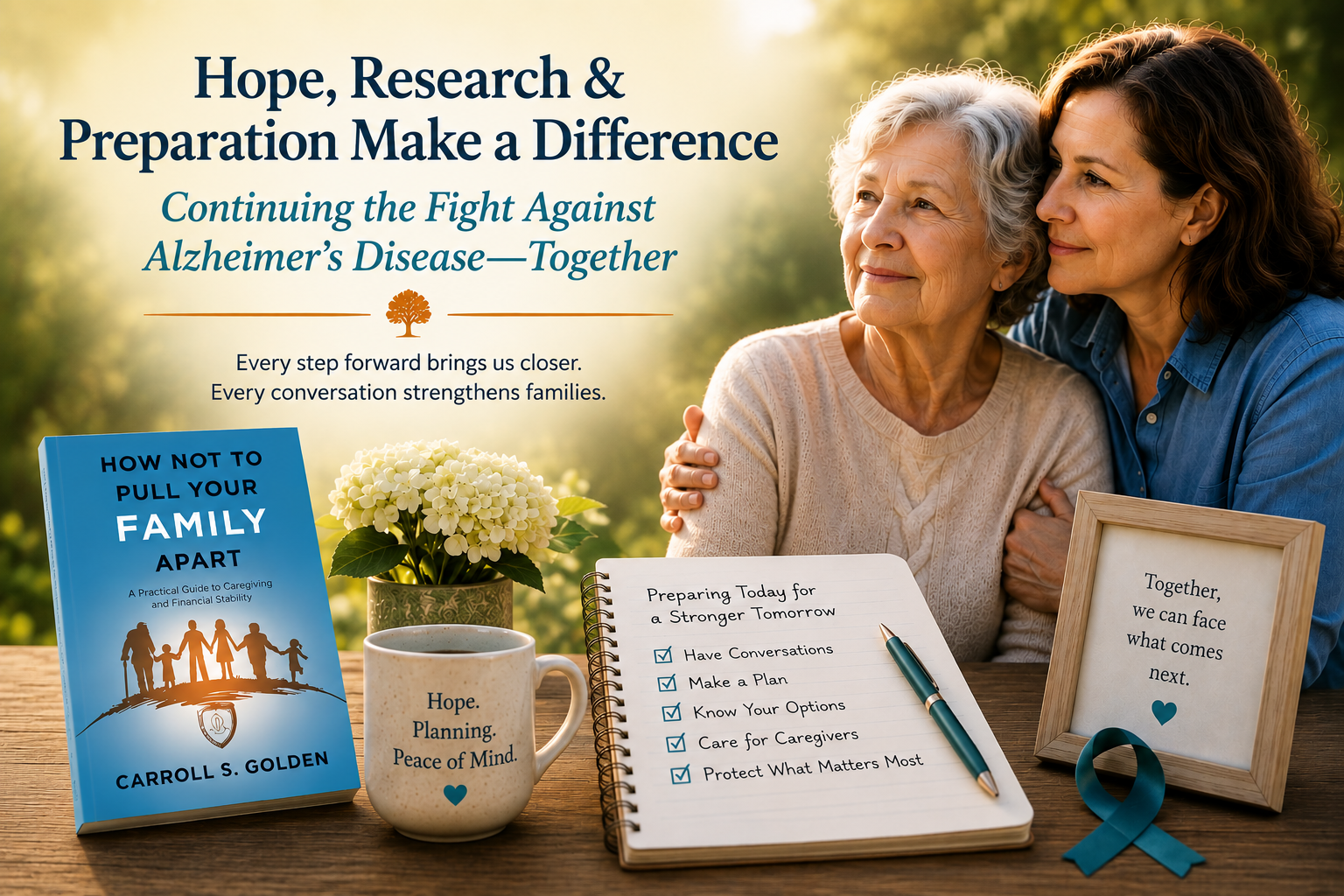
These are the kinds of caregiving and longevity challenges I explore in my book, How Not To Pull Your Family Apart: A Practical Guide to Caregiving and Financial Stability. My hope is to help families prepare thoughtfully, communicate openly, and create plans that protect both their loved ones and their future.