Supporting Caregivers at Work Is More Than a Benefit—It's a Business Necessity
Retirement Strategist Carroll Golden
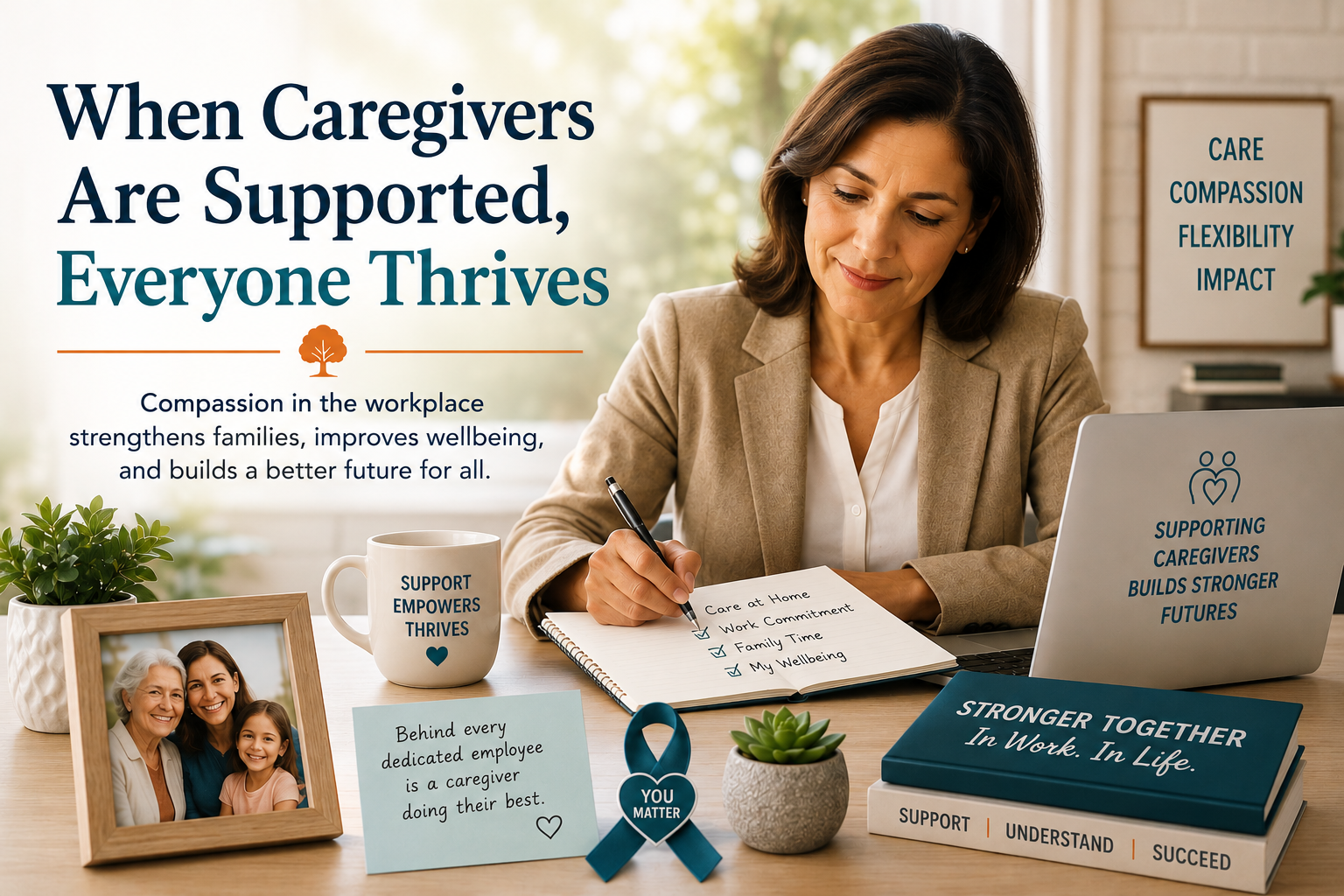
Caregiving has quietly become one of the defining challenges facing today's workforce.
Many employees begin each workday balancing meetings, deadlines, and professional responsibilities while also managing doctor's appointments, medications, financial decisions, and the needs of aging parents, spouses, or loved ones.
Yet caregiving often remains invisible in the workplace.
The reality is that supporting caregivers is no longer simply an employee benefit.
It is a business necessity.
Caregivers Carry More Than Responsibilities
Caregiving affects every aspect of a person's life.
It influences emotional wellbeing, financial stability, career growth, and physical health.
Research continues to show that caregivers often experience higher levels of stress, greater financial pressure, and increased difficulty balancing work and family responsibilities compared with those who are not caregivers.
Many delay their own healthcare.
Others reduce work hours, pass on promotions, or leave the workforce entirely.
These decisions don't just affect today's paycheck—they can influence retirement savings, Social Security benefits, and long-term financial security for years to come.
The Workplace Has an Opportunity
Employers cannot eliminate caregiving responsibilities.
But they can reduce the burden employees carry.
Organizations that recognize caregivers and provide meaningful support often create healthier, more engaged, and more productive workplaces.
Support doesn't always require expensive programs.
Sometimes it begins with flexibility.
Flexible schedules, remote work options, employee assistance programs, caregiver resource groups, and managers who understand the realities employees face can make a meaningful difference.
When employees feel supported, they are better equipped to support others.
Caregiving Is No Longer Just About Older Adults
When many people hear the word caregiver, they immediately think about someone caring for an aging parent.
Today's caregivers tell a much broader story.
They may be supporting a spouse recovering from illness, a child with special needs, a family member with dementia, or multiple generations at the same time.
This "sandwich generation" is becoming increasingly common.
These individuals often balance careers while caring for both children and aging relatives.
Without support, the emotional and financial strain can become overwhelming.
The Hidden Cost of Caregiving
One of the greatest financial risks of caregiving isn't always the direct medical expenses.
It's the income that quietly disappears.
Missed promotions.
Reduced retirement contributions.
Lower lifetime earnings.
Interrupted careers.
These hidden costs can affect financial independence long after caregiving responsibilities have ended.
That's why caregiving should be part of every retirement and financial planning conversation.
Planning Before the Crisis
Families often assume they'll "figure it out" if caregiving becomes necessary.
Unfortunately, crises rarely arrive with advance notice.
Planning ahead means discussing:
Who will provide care?
How will work responsibilities be managed?
What financial resources are available?
What community services can provide support?
How can caregiving responsibilities be shared among family members?
These conversations create options before difficult decisions must be made.
A Final Thought
Caregiving is no longer a personal issue affecting only a small number of families.
It is shaping today's workforce, tomorrow's retirement plans, and the financial wellbeing of millions of households.
When employers recognize caregivers, everyone benefits.
Employees experience greater wellbeing.
Businesses retain valuable talent.
Families gain stability.
Supporting caregivers isn't simply the compassionate thing to do.
It is one of the smartest investments organizations—and families—can make for the future.
Continue the Conversation
These are the kinds of real-life caregiving challenges I explore in my book, How Not To Pull Your Family Apart: A Practical Guide to Caregiving and Financial Stability. My goal is to help families and professionals better understand how caregiving, financial planning, and longevity intersect so they can prepare with greater confidence and compassion.