The Conversation Can’t Wait
Retirement Strategist Carroll Golden

When it comes to planning for the future, many families know they should have a conversation—but knowing and doing are two very different things.
Conversations about aging, retirement, extended care, finances, and independence are often postponed because they feel uncomfortable. Parents may not want to worry their children. Adult children may be afraid of appearing intrusive. And everyone may assume there will be plenty of time to figure things out later.
But later has a way of arriving faster than expected.
That is why I believe planning for the future should not begin with a crisis. It should begin with a conversation.
Why Start the Conversation Now?
Aging affects every family differently. Some people remain healthy and independent well into their later years. Others experience unexpected health changes that require additional support. Financial circumstances can change. Family members may move away. A spouse who was expected to provide care may eventually need care themselves.
There is no way to predict every possibility.
However, families can prepare for the possibility that things may change.
Starting the conversation early gives everyone something incredibly valuable: time.
Time to ask questions. Time to understand available options. Time to consider financial realities. And, perhaps most importantly, time to listen to what each family member wants.
Waiting until a crisis occurs can leave families making important decisions under pressure. When emotions are high and time is limited, even simple decisions can become difficult.
Planning Is Not a One-Person Job
One of the most important lessons I have learned is that planning for care should not automatically fall on one person's shoulders.
A family may have one adult child who lives nearby, another who handles financial matters, and another who provides emotional support or helps coordinate care. Each person may have a different role.
The important thing is to recognize that everyone's circumstances are different.
Being part of the conversation does not mean every family member will have the same responsibility. It means that expectations can be discussed openly rather than assumed.
Assumptions can create problems.
A parent may assume that an adult child will provide care. The adult child may love their parent deeply but have a career, financial obligations, or health concerns of their own. Neither perspective is necessarily wrong, but without a conversation, those differences may not become clear until a difficult situation arises.
That is why communication matters.
The Care Planning Team
I encourage families to think about planning as a team effort.
A strong planning conversation brings together different perspectives and helps identify the options available for immediate, extended, or long-term care needs.
Everyone should have an opportunity to ask questions.
What does Mom or Dad want?
Do they hope to remain in their current home?
What happens if remaining at home is no longer practical?
What financial resources are available?
Who is willing and able to help?
What professional support might eventually be needed?
These questions do not need to be answered all at once.
In fact, they probably will not be.
Planning is a process, not a single meeting or a document that gets placed in a drawer and forgotten.
Three Steps Toward a Better Conversation
1. Listen to Everyone's Wishes
The first step is to listen.
Before trying to solve the problem, take time to understand what matters to the people involved.
Every generation may have different priorities. A parent may value independence above everything else. An adult child may be focused on safety. Another family member may be concerned about financial sustainability.
Listening does not mean promising that every wish can be fulfilled.
It means giving those wishes a place in the conversation.
2. Look at the Reality
The next step is to examine what is actually possible.
This is where financial resources, health considerations, family responsibilities, and available care options need to be discussed honestly.
Not every desired outcome will be realistic.
That can be difficult to accept, but avoiding reality does not make it disappear. A workable plan must balance personal preferences with practical limitations.
Families may need to prioritize what is essential and distinguish it from what would simply be nice to have.
3. Work Toward a Plan Together
Once everyone has had an opportunity to share their perspective and the realities have been considered, the family can begin developing a plan.
The plan does not have to be perfect.
It simply needs to provide direction.
And it should remain flexible.
Life changes. Health changes. Financial situations change. A plan that works today may need to be adjusted tomorrow.
The goal is not to predict every detail of the future. The goal is to be better prepared for it.
Don't Wait for a Crisis
Important conversations are often the hardest ones to start.
It can feel easier to say, “We'll deal with that later.”
But later may come in the form of an unexpected illness, an accident, a financial challenge, or a sudden need for care.
By then, the family may be forced to make decisions without understanding each other's wishes or knowing what options are available.
Starting earlier creates more choices.
It also gives families the opportunity to learn, ask questions, and make decisions thoughtfully instead of reactively.
Knowledge Can Lead to Action
The purpose of planning is not to create fear.
It is to create awareness.
When families understand the possibilities, they can begin to take meaningful action. They can gather information, review their resources, discuss expectations, and seek professional guidance when necessary.
No two families are the same. The solutions that work for one family may not work for another.
But the need for conversation is universal.
Planning for aging, extended care, and retirement is not simply about money or paperwork. It is about people. It is about understanding what matters, recognizing the challenges ahead, and working together before circumstances force the conversation.
The first step does not have to be complicated.
Sometimes, it simply begins with a question.
“Have we talked about what we want for the future?”
That one question may open the door to a conversation that helps your family become better prepared, better informed, and better able to face whatever comes next.
Continue the Conversation
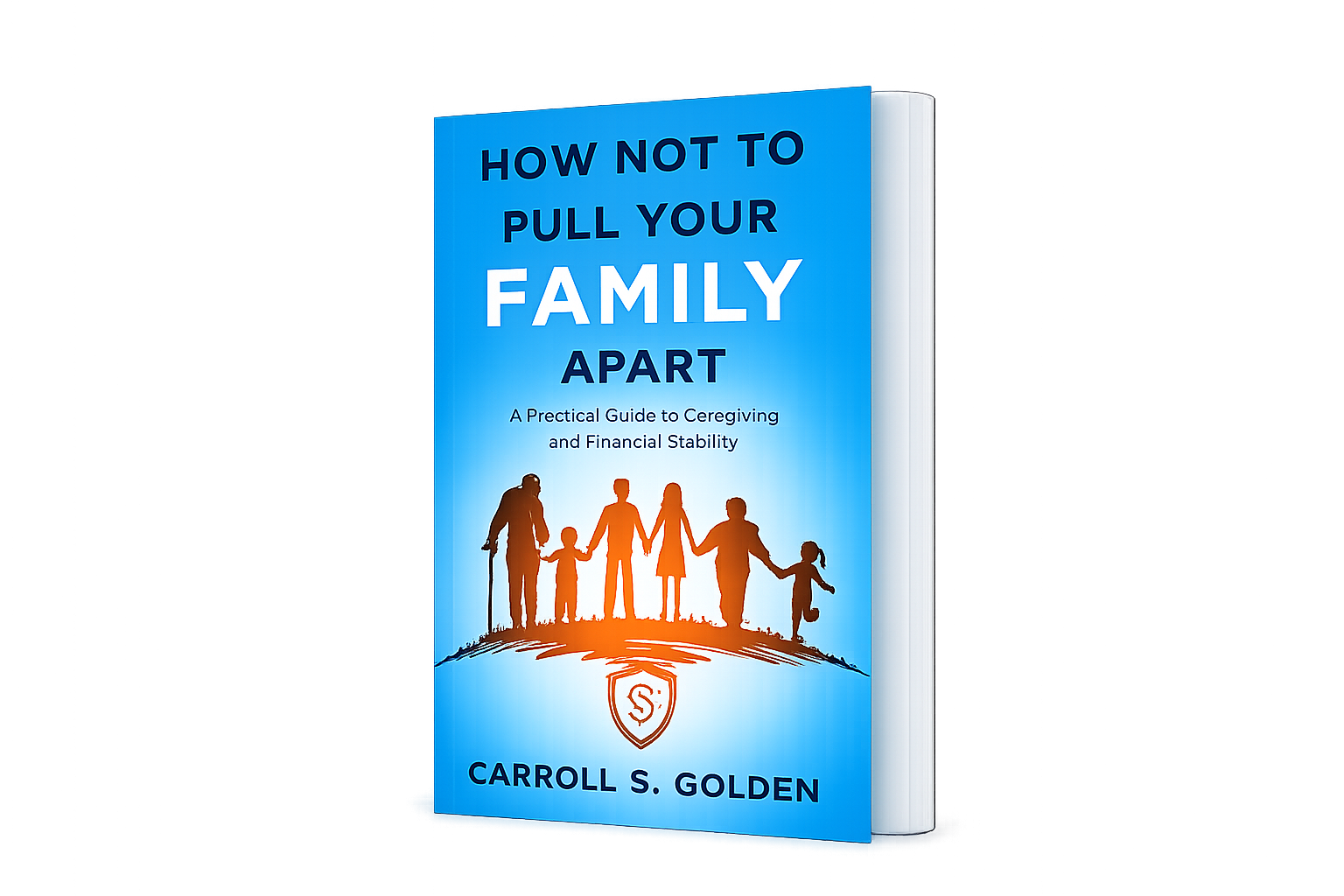
If you would like to explore these conversations in greater depth, I invite you to read my book, How Not to Pull Your Family Apart: A Practical Guide to Caregiving and Financial Stability.
Through the experiences of a multigenerational family, the book explores the difficult decisions surrounding aging, caregiving, retirement, and financial stability—and offers a practical framework for starting conversations before a crisis forces families to act.
Learn more about the book and discover how thoughtful planning and better communication can help bring families together when it matters most.