
What Is an RBA—and What Does It Mean for Retirement Planning?
Retirement Strategist Carroll Golden
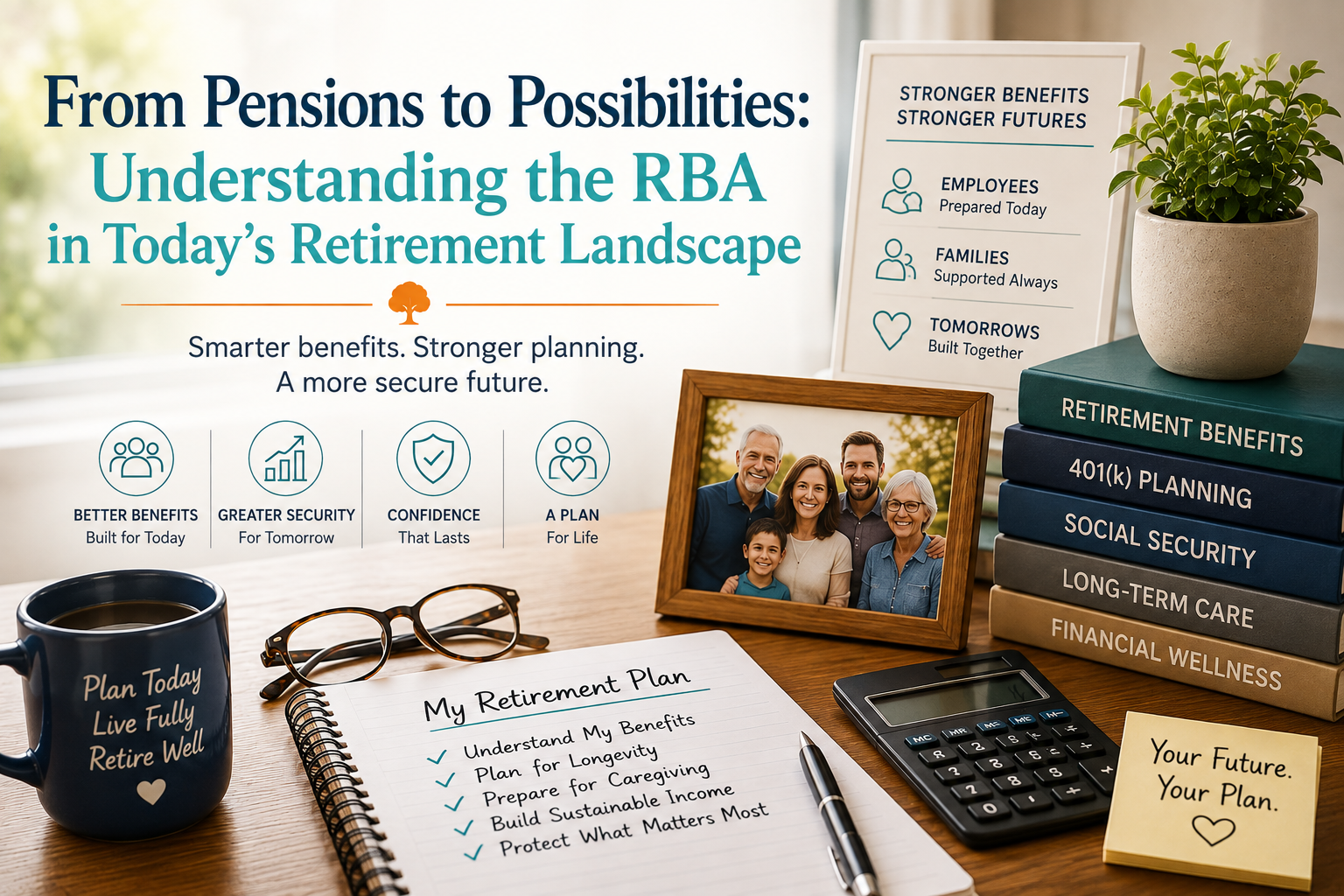
Retirement plans have changed dramatically over the generations.
Many people remember a time when a traditional pension was expected to provide a predictable stream of income in retirement. Today, defined-contribution plans such as 401(k)s are far more familiar, placing greater responsibility on individuals to accumulate and manage their retirement assets.
But there are still examples of employers trying to bridge some of that gap.
IBM's Retirement Benefit Account, or RBA, is one example—and it offers an interesting lesson about where retirement planning is headed.
From Pensions to Individual Responsibility
In the 1980s, IBM froze its traditional defined-benefit pension for many employees and shifted toward a 401(k)-based retirement model.
That transition reflected a much larger change taking place across corporate America.
Traditional pensions promised a specific benefit, generally based on factors such as salary and years of service. Defined-contribution plans changed the equation. Instead of the employer promising a specific retirement income, employees became responsible for contributing to and managing their retirement savings.
That shift also moved more longevity and investment risk onto the individual.
And that matters because people are living longer.
A retirement account that needs to support someone for twenty, thirty, or potentially more years requires a very different strategy than one designed for a shorter retirement.
So, What Is an RBA?
IBM's Retirement Benefit Account is essentially a cash-balance retirement benefit within IBM's Personal Pension Plan.
Under the current arrangement, eligible U.S. employees receive a monthly credit equal to 5% of eligible pay, without having to make an employee contribution to receive that credit. The RBA also receives interest credits. For 2026, IBM states that the interest crediting rate is 6%. Beginning in 2027, the interest-crediting formula changes to the 10-year U.S. Treasury yield, subject to a minimum rate under the plan's terms.
That distinction is important.
The RBA isn't simply another 401(k).
It combines characteristics of defined-benefit and defined-contribution approaches. Employees receive a defined pay credit, while the account balance grows through an interest-crediting mechanism.
For employees, that can create a more predictable component of retirement planning than relying entirely on investment returns.
Why Does This Matter?
Because predictable income matters.
When I talk about retirement planning, I often remind people that retirement isn't simply about accumulating the largest possible account balance.
It is about answering a much more practical question:
How will you pay for your life when your paycheck stops?
That question becomes even more important as people live longer.
A retirement portfolio can fluctuate with markets. Expenses can change. Healthcare costs can increase. Families can experience unexpected caregiving responsibilities.
Having a source of retirement income with a defined structure can therefore play an important role in a broader retirement strategy.
But that doesn't mean an RBA—or any pension-style benefit—solves the entire retirement puzzle.
It doesn't.
Retirement Income Is Bigger Than One Account
One of the mistakes I see in retirement conversations is treating retirement savings as if they exist in isolation.
They don't.
A person's retirement picture may include:
Social Security
Employer retirement benefits
401(k) or other defined-contribution savings
Personal investments
Home equity
Business income
Part-time or consulting income
Annuity income
Cash reserves
Family resources
And then there are the expenses.
Housing.
Healthcare.
Taxes.
Travel.
Family support.
Long-term care.
Caregiving.
The list doesn't get shorter simply because someone retires.
In many cases, it gets more complicated.
The Longevity Problem
This is where the RBA conversation connects directly to something I discuss frequently: longevity planning.
People aren't simply retiring and entering a short period of leisure.
They may spend decades in what we traditionally call retirement.
That means retirement income needs to be considered alongside the possibility of:
living well into one's 80s or 90s,
needing extended care,
supporting an aging spouse,
helping adult children,
experiencing periods of reduced health,
or continuing to work longer than originally expected.
The longer someone lives, the more important sustainable income becomes.
A retirement plan that looks excellent at age 65 may look very different at age 85.
Don't Confuse Predictability With Sufficiency
This is an important distinction.
A predictable retirement benefit is valuable.
But predictable does not automatically mean sufficient.
An employee could have an RBA, a 401(k), Social Security, and other assets and still face a retirement shortfall if their spending, healthcare needs, taxes, or longevity exceed expectations.
That's why I don't believe retirement planning should revolve around one benefit or one account.
The better question is:
How do all of the pieces work together?
The Caregiving Connection
There is another reason this matters.
Retirement planning increasingly overlaps with caregiving planning.
A person may expect to retire at 65 but continue working because a parent needs care.
Another person may leave work earlier than expected to care for a spouse.
Someone else may continue working because they need to help an adult child financially.
These decisions can affect retirement savings, Social Security timing, healthcare coverage, and future income.
That is why I believe retirement planning needs to include conversations that go beyond investment returns.
We need to talk about the people behind the plan.
What Should Employees Be Asking?
If you have access to an employer-sponsored retirement benefit, don't simply ask, "How much is in my account?"
Ask better questions.
What exactly does the benefit provide?
How are contributions or credits calculated?
How does the interest-crediting formula work?
When can the benefit be accessed?
What happens if I leave the company?
What happens if I work beyond my expected retirement age?
How does the benefit coordinate with Social Security and my other retirement accounts?
And perhaps most importantly:
What role should this benefit play in my overall retirement income strategy?
Those questions can turn a retirement benefit from something you vaguely know exists into something you actually understand.
Retirement Planning Is About the Whole Picture
The evolution from traditional pensions to defined-contribution plans—and now to hybrid approaches such as cash-balance arrangements—shows us something important.
Retirement planning is not static.
It changes as employers change.
It changes as markets change.
It changes as laws change.
And most importantly, it changes as people live longer and their lives become more complicated.
An RBA can be an important piece of that puzzle. But it is still only a piece.
The real work is understanding how that benefit fits alongside Social Security, personal savings, healthcare planning, caregiving considerations, taxes, and the lifestyle someone hopes to maintain.
Because retirement isn't about having a retirement account.
It's about having a retirement plan.
And those are not the same thing.
As we move through 2026 and look toward the retirement landscape ahead, I believe the most valuable conversations will be the ones that move beyond simply asking, "How much have you saved?"
The better question is:
"How will all of your resources work together to support the life you want to live—and the people you may need to care for?"