When Health Care Becomes Unaffordable, Families Become the Safety Net
Retirement Strategist Carroll Golden
Pew Research Center has put numbers to a concern many Americans already feel in their homes, workplaces, and bank accounts.
In an April 2026 survey of 5,103 U.S. adults, 73% said the affordability of health care is a very big problem for the country. That is up from 67% in February 2025. Health care affordability now ranks alongside the largest economic concerns facing Americans.
This is not an abstract worry.
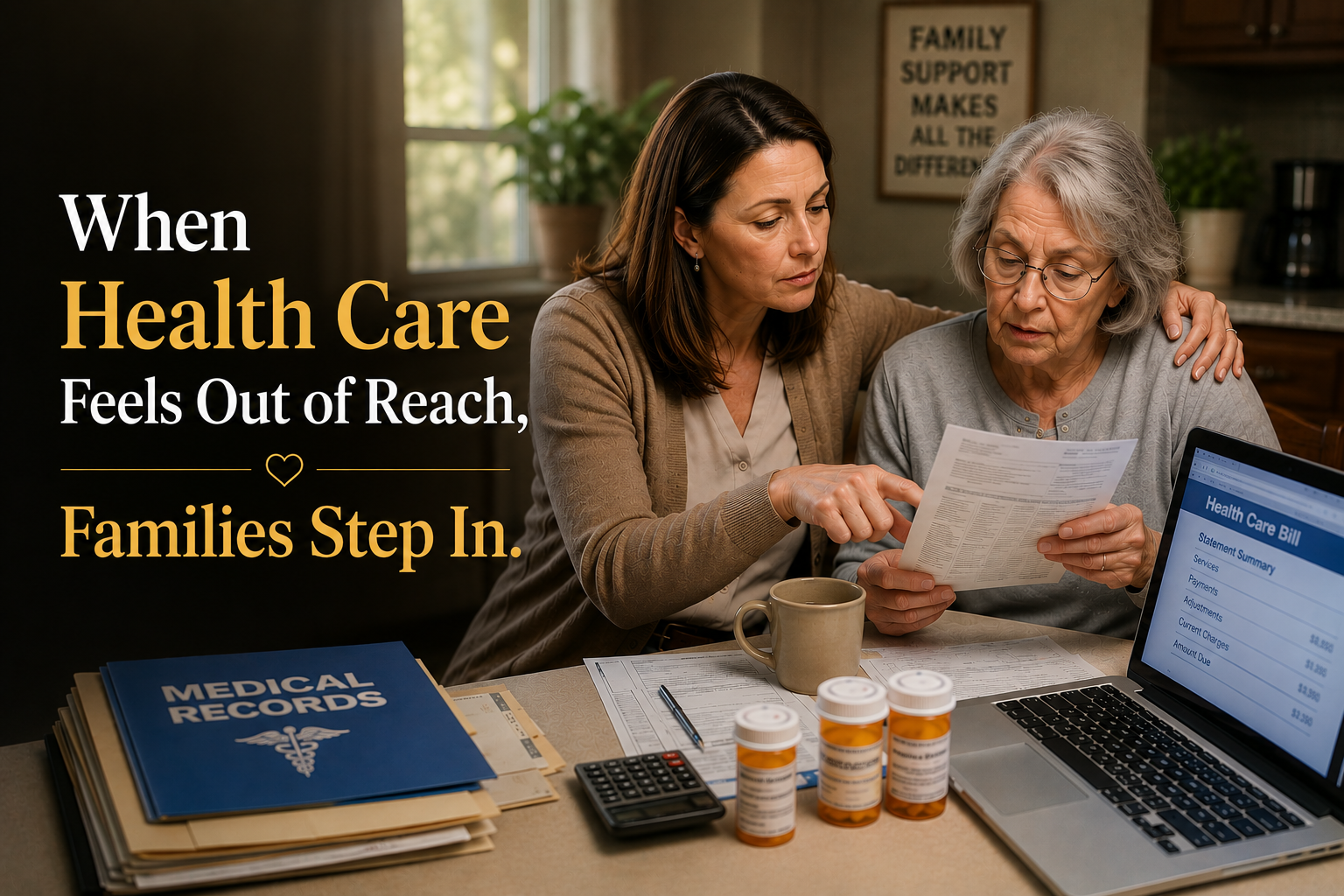
It is the adult daughter trying to help her mother understand bills, medications, and Medicare choices after work.
It is the husband arranging rides, appointments, meals, and home support for his wife while wondering how long their savings will last.
It is the employee quietly answering calls from a parent’s doctor during the workday because there is no one else to do it.
Behind the cost of care is another cost that is rarely counted clearly enough: the strain placed on families.
We have often spoken about the aging of America and the arrival of Peak 65®. During the 2025 high point of this population shift, about 11,400 Americans turned 65 each day. Across the larger Peak 65® Zone, from 2024 through 2027, more than 11,200 Americans reach age 65 daily.
Turning 65 does not mean a person suddenly needs care. Many older adults remain active, independent, and deeply involved in their communities.
But aging does increase the odds that families will face new questions about medical needs, mobility, chronic illness, housing, transportation, money, and long-term support.
And when professional care feels too costly, too hard to find, or too confusing to arrange, families step in.
That is what I call The Shadow Caregiving System™.
It is the vast, often unseen network of spouses, daughters, sons, relatives, friends, and neighbors who keep older adults safe and supported. They manage schedules. They pick up prescriptions. They prepare meals. They sit in waiting rooms. They handle paperwork. They miss work. They worry at night.
Their help may be given with love. But love does not remove the stress, the financial pressure, or the need for support.
The concern is not only that health care costs are rising in the public mind. It is that these worries are growing at the same time a very large generation is moving into its later years.
These facts do not prove that one issue causes the other. They do tell us that the country is facing two pressures at once: more concern about affording care, and more families likely to be touched by aging-related needs.
That should matter to employers.
A caregiver may be sitting in your next meeting, meeting every deadline while also coordinating a parent’s care from a phone in the parking lot.
It should matter to health care leaders.
Patients do not move through the system alone. Family caregivers are often the ones carrying out the plan after the appointment ends.
It should matter to communities and public leaders.
When families are left to fill every gap by themselves, the strain does not stay private. It affects jobs, savings, health, family ties, and the ability of older adults to live with dignity.
We need to stop treating caregiving as a personal issue that families should quietly manage behind closed doors.
We need clearer information, better planning, practical support for caregivers, more affordable care choices, and workplaces that understand the demands many employees now carry.
The Pew Research chart is more than a measure of public opinion. It is a warning light.
When nearly three out of four adults say health care affordability is a very big national problem, we should pay attention to the people absorbing the impact when care becomes difficult to afford.
Too often, that person is a family caregiver.
And too often, The Shadow Caregiving System™ is holding together a system that families cannot be expected to carry alone.
Continue the conversation
If you’re thinking about how aging, caregiving, and longevity are reshaping retirement, these are themes I explore more deeply in my book, Leading in the New Retirement Era.