Where AI Belongs in Longevity Planning
Retirement Strategist Carroll Golden

Artificial intelligence is rapidly becoming part of nearly every profession, including financial services. Advisors today are being introduced to tools that can summarize meetings, organize client information, automate follow-up tasks, and improve operational efficiency.
The question is no longer whether advisors should use AI. The more important question is: Where does AI belong?
For professionals serving older adults and multigenerational families, the answer is clear. AI works best when it removes administrative friction and allows advisors to focus on the human side of planning.
Where AI Adds Value
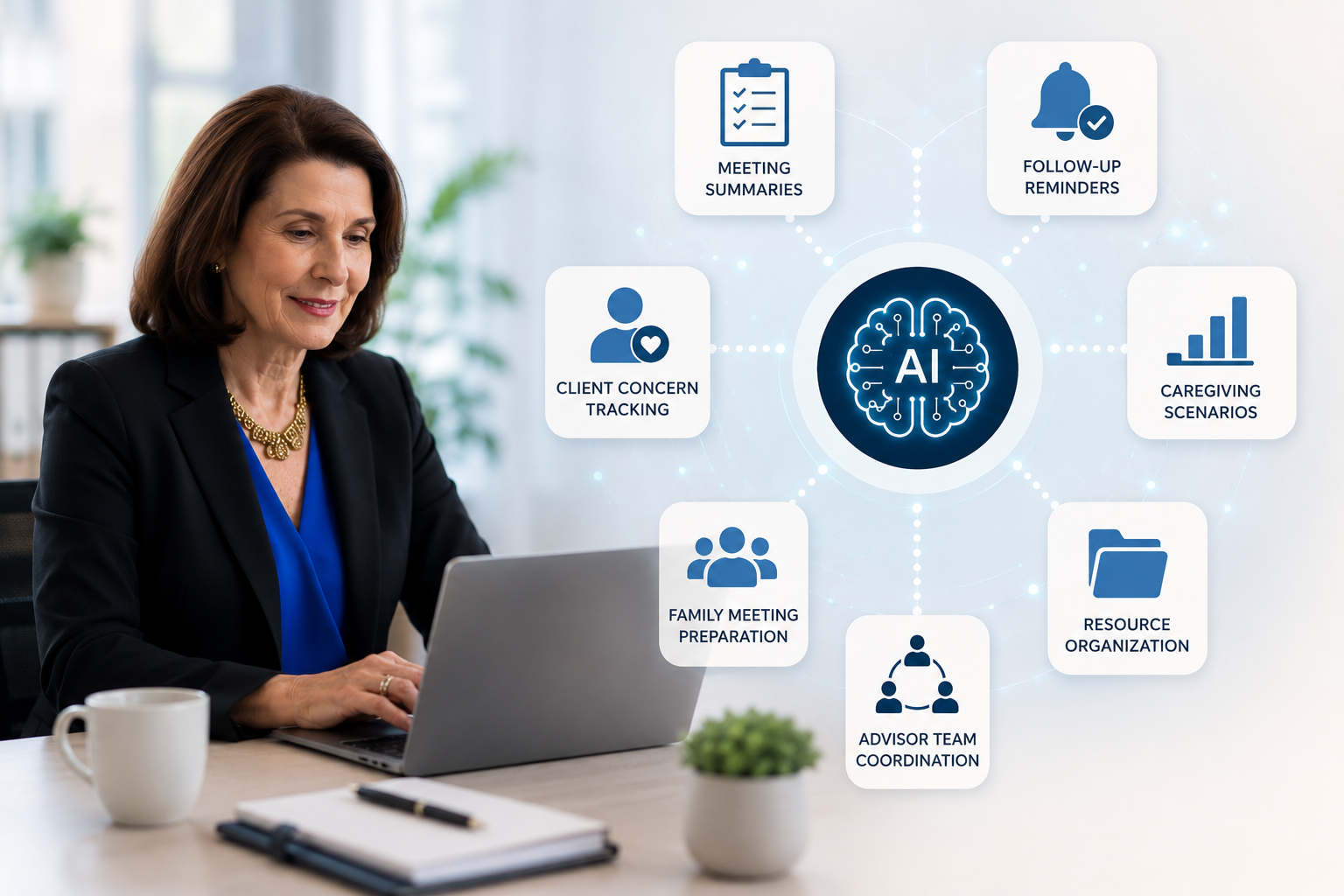
Longevity planning often involves complex family dynamics, healthcare considerations, caregiving concerns, and long-term financial decisions. AI can help advisors manage these complexities by supporting tasks such as:
Meeting summaries and note organization
Follow-up reminders and task tracking
Client concern monitoring
Caregiving expense scenario analysis
Family meeting preparation
Resource organization
Advisor team coordination
By streamlining these processes, advisors can spend less time managing information and more time engaging with clients.
What Should Never Be Outsourced

While AI can process data, it cannot replace human understanding.
Clients facing retirement transitions, caregiving responsibilities, health challenges, or family conflicts are not simply looking for information. They are looking for guidance, empathy, and trust.
These critical areas remain firmly in the human domain:
Emotional conversations
Family tensions and conflict resolution
Ethical judgment
Relationship building
Life-changing decisions
No technology can fully understand a family's values, history, fears, or aspirations. Those conversations require human wisdom and experience.
The Advisor's Greatest Advantage
As technology becomes more sophisticated, the advisor's role becomes even more valuable.
Clients do not need another algorithm. They need someone who can help them interpret options, navigate uncertainty, and make decisions that align with their goals and values.
The advisors who thrive in the years ahead will be those who embrace technology as a support system rather than a replacement for meaningful client relationships.
The Future Is Human-Centered
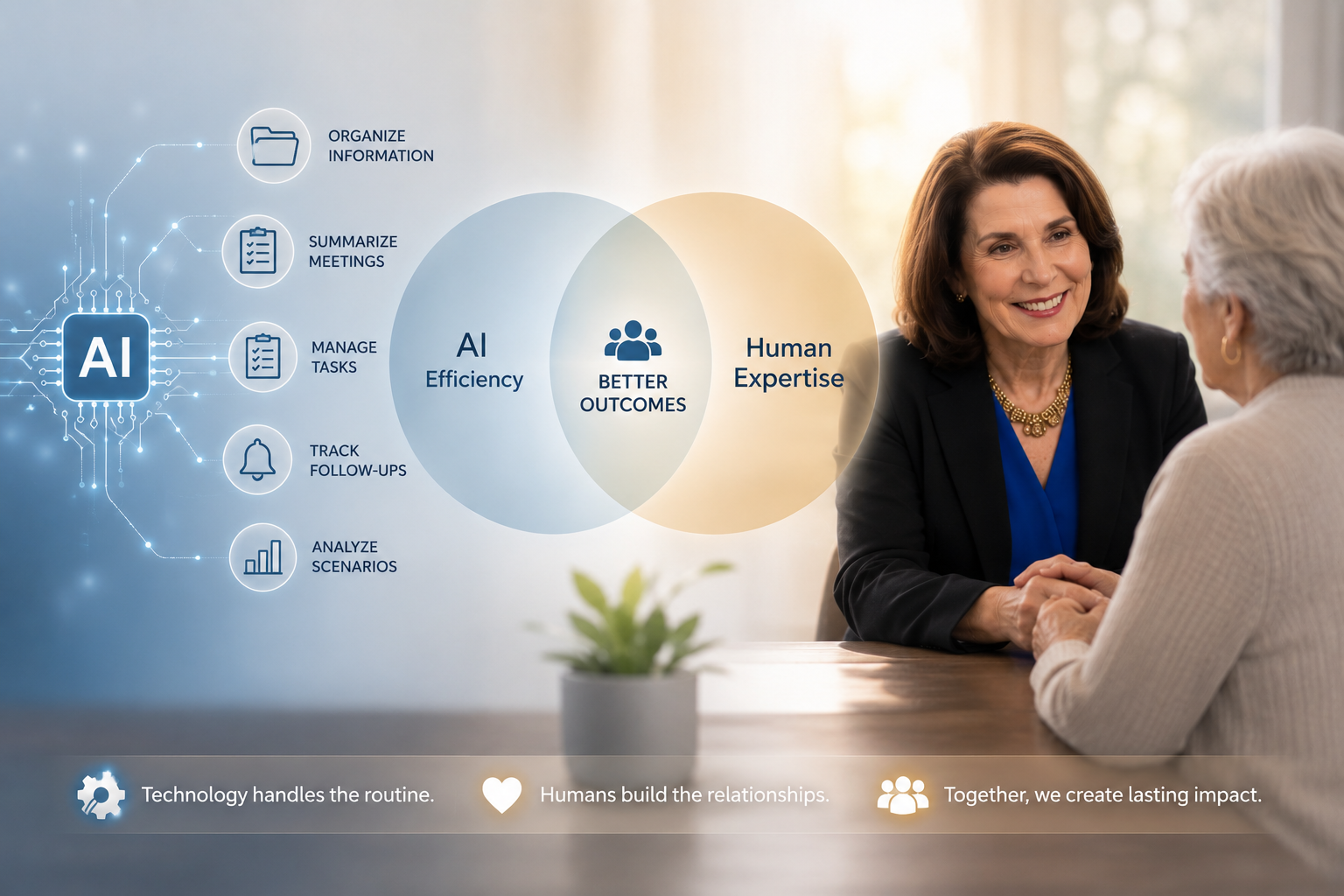
The future of longevity planning is not about choosing between AI and human expertise. It is about combining the strengths of both.
AI can make advisors more responsive, organized, and efficient.
Human advisors provide judgment, compassion, and trust.
When technology handles routine tasks and advisors focus on relationships, clients receive the best of both worlds.
The goal is not to make advice less human.
The goal is to make human advice more impactful.
Continue the Conversation
As our profession continues to evolve, I believe the most effective advisors will be those who combine innovative tools with genuine human connection. Longevity planning isn't just about finances—it's about helping individuals and families navigate the opportunities and challenges that come with longer lives.
In my book, Leading in the New Retirement Era, I share insights, strategies, and practical guidance for advisors seeking to strengthen client relationships, navigate multigenerational planning, and build practices that are prepared for the future.
If you're interested in exploring these ideas further, I invite you to read Leading in the New Retirement Era and join me in reimagining what effective retirement and longevity planning can look like in the years ahead.
Together, we can help clients navigate longer lives with greater confidence, purpose, and security.