
Who’s Returning Your Shopping Cart?
Retirement Strategist Carroll Golden
“My idea of superwoman is someone who scrubs her own floors.” – Bette Midler
There’s a story about a retired judge who refused to create a will because, as he liked to say, “I’m not ready to give the kids that kind of hope.”
After years of hearing every excuse possible, his advisor finally looked at him and said:
“Judge, at some point you’ve got to stop running your life like a courtroom and start treating it like a legacy.”
The judge sat quietly for a moment before responding:
“Fine. But I’m still not giving my son power of attorney. He can’t even return a shopping cart.”
Funny? Absolutely.
But also surprisingly honest.
Because beneath the humor sits a reality many families quietly wrestle with: planning for aging is deeply personal. It is not only about finances, legal paperwork, or healthcare directives. It is about trust, responsibility, relationships, and the people we believe will show up when life becomes more complicated.
Aging Is Not a Solo Act

For professionals who work with aging clients and their families, this truth appears every day.
Behind every retirement account, estate document, or long-term care discussion is a human story. There are family dynamics, old assumptions, unspoken fears, and emotional decisions that cannot always be solved with a spreadsheet.
Sometimes families come together beautifully.
Sometimes they reveal tensions no one expected.
And sometimes the conversations become unintentionally funny because humor is how people cope with difficult realities.
But through all of it, one thing becomes clear:
Aging is not a solo act.
At some point, everyone depends on someone else—for support, guidance, advocacy, or simply help navigating daily life.
That is why planning matters so much.
Planning Is About More Than Paperwork
Many people think planning begins and ends with documents:
wills
trusts
healthcare directives
retirement accounts
beneficiary forms
Those tools matter. But planning is also about something deeper.
It is about dignity.
It is about deciding who understands your wishes, who can communicate during difficult moments, and who can help carry your values forward when you no longer can do everything independently.
The real conversations are often not about money at all.
They are about questions like:
Who do I trust?
Who will advocate for me?
Who can handle responsibility with care?
Who will show up consistently?
Who is capable of balancing compassion and decision-making?
Or, as the retired judge put it:
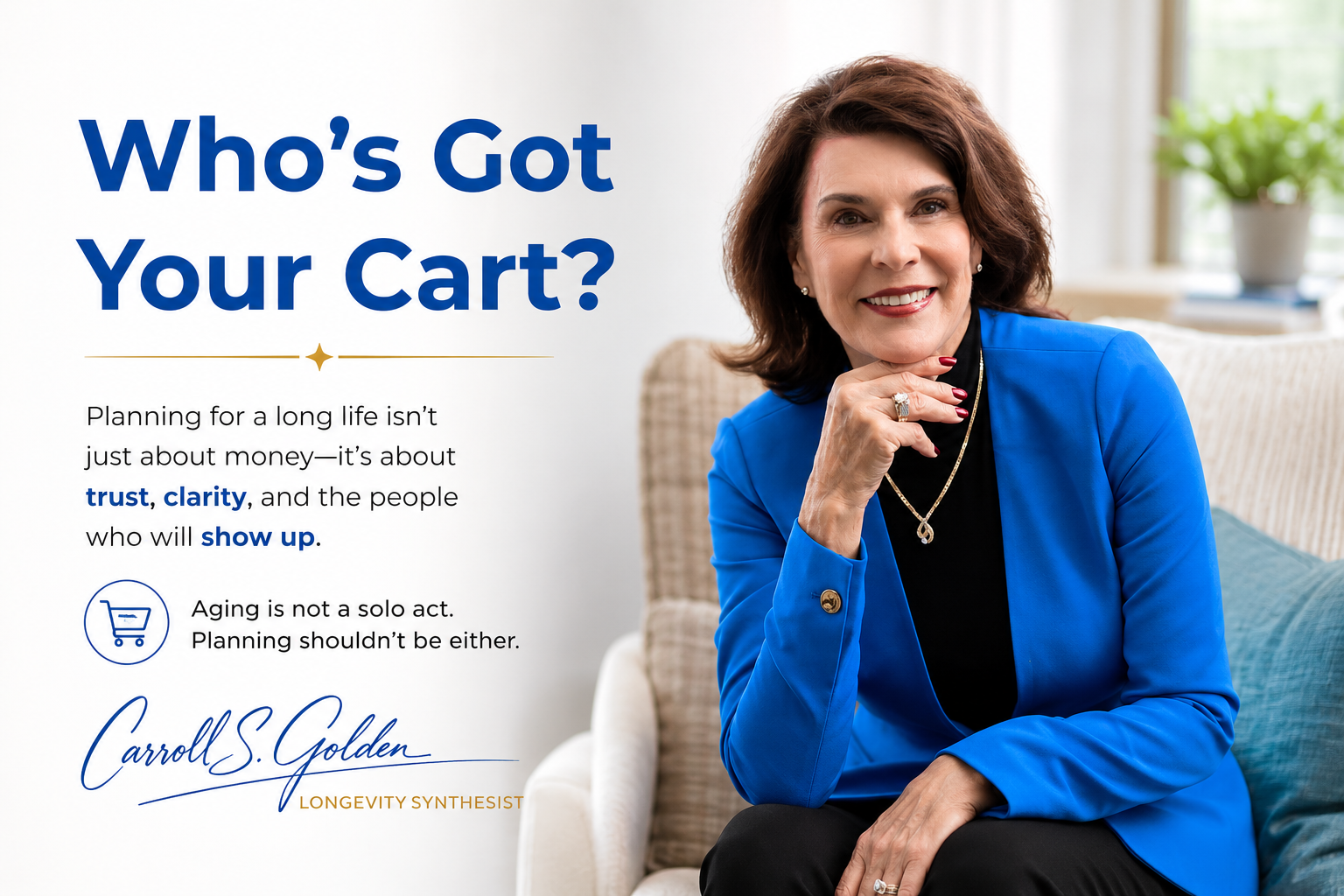
Who’s returning your shopping cart?
The Role of Trusted Advisors

This is where advisors, planners, caregivers, and professionals play such an important role.
Not because they have every answer, but because they help families begin conversations many people avoid for far too long.
The best planning conversations create space for:
honesty
clarity
preparation
compassion
and sometimes even humor
Because humor has a way of lowering defenses and helping people talk about subjects that otherwise feel uncomfortable.
A long life is not simply something to manage.
It is something to design thoughtfully.
Planning for Meaning, Not Just Money
Retirement and longevity planning are evolving. People are living longer, navigating more transitions, and redefining what later life looks like.
That means planning can no longer focus only on financial efficiency.
Families also need conversations around:
purpose
independence
caregiving
communication
legacy
and emotional readiness
The goal is not simply checking legal boxes.
The goal is creating a framework for living well and supporting one another through change.
Because how we plan today often becomes how our families experience tomorrow.
Begin the Conversation
You do not need every answer immediately.
You do not need a perfect family dynamic.
You simply need to begin.
Start the conversation.
Name the people you trust.
Talk openly about wishes, concerns, and responsibilities.
And if someone is still resisting the conversation?
Maybe ask them one simple question:
“Who is your superhero, and why?”