Why the Future of Advice Isn't Artificial
Retirement Strategist Carroll Golden
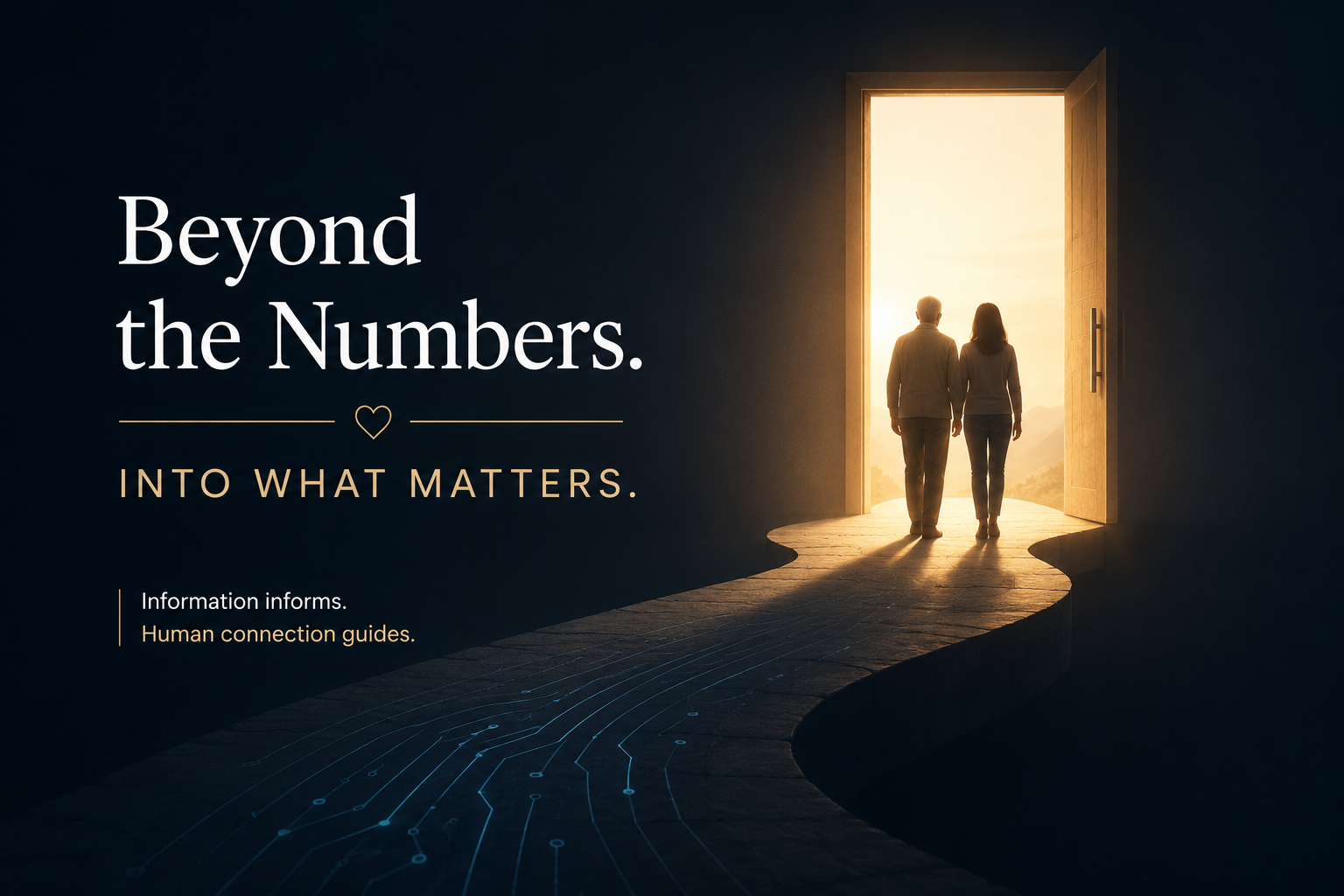
Artificial intelligence is changing nearly every profession—including financial services.
Today, AI can build a retirement income strategy in seconds. It can estimate healthcare expenses, explain Medicare options, compare insurance products, and even project how long your savings might last.
Those are remarkable advances.
But here's what AI still can't do.
It can't sit at a Thanksgiving table where three siblings disagree about what's best for their aging mother.
It can't recognize the hesitation in a client's voice when they're worried about becoming a burden to their children.
It can't navigate decades of family history, unspoken resentment, or the emotional weight that often accompanies decisions about caregiving, inheritance, and aging.
Technology can provide information.
Advisors provide understanding.
Advice Has Never Been Just About Numbers
For years, many people viewed financial advisors primarily as investment managers.
That role remains important.
But today's families are facing challenges that go far beyond portfolio performance.
Longer life expectancies, rising healthcare costs, caregiving responsibilities, blended families, and changing retirement expectations have transformed what clients truly need from an advisor.
The conversations that matter most often have very little to do with market returns.
Instead, they're about questions like:
Who will care for me if I need help?
How do we divide caregiving responsibilities fairly?
How do we preserve family relationships while making difficult financial decisions?
What happens if Mom or Dad can no longer make decisions independently?
These aren't spreadsheet problems.
They're human problems.
AI Can Prepare the Information—But People Create the Trust
Artificial intelligence is an incredible assistant.
It can summarize documents, organize complex information, and help advisors work more efficiently than ever before.
That efficiency creates opportunity.
Instead of spending hours gathering information, advisors can spend more time doing what matters most—listening.
Listening to the concerns clients haven't shared with anyone else.
Helping families have conversations they've been avoiding for years.
Creating clarity when emotions are running high.
Building trust when uncertainty feels overwhelming.
Those moments can't be automated.
The Advisor's Greatest Value Is Becoming a Guide
As caregiving responsibilities continue to grow, financial decisions are becoming increasingly intertwined with healthcare, family dynamics, and longevity planning.
Clients aren't simply looking for technical expertise.
They're looking for someone who can guide them through life's most complicated transitions.
Someone who asks better questions.
Someone who helps families communicate.
Someone who understands that the best financial plan is only successful if the family can actually carry it out together.
The future advisor won't compete with AI.
The future advisor will use AI to become even more human.
The Conversation AI Can't Have
The advisors who will thrive in the years ahead won't be the ones who know the most formulas.
They'll be the ones who create the safest space for honest conversations.
Because when life gets messy—and it always does—clients aren't searching for another algorithm.
They're searching for someone they trust.
That has always been the heart of great advice.
And I believe it always will be.
Final Thoughts
Artificial intelligence will continue to reshape our industry. We should embrace it, learn from it, and use it wisely. But we should never forget that our greatest value has never been our ability to calculate—it has been our ability to connect.
Technology may make us faster.
Human understanding makes us indispensable.
Continue the Conversation
If you're thinking about how longevity, caregiving, and changing family dynamics are reshaping the future of financial advice, I explore these topics in greater depth in my book, Leading in the New Retirement Era. It's a guide for advisors who want to build deeper relationships, lead more meaningful conversations, and better serve today's multigenerational families.
Because the future of advice isn't artificial—it's deeply human.